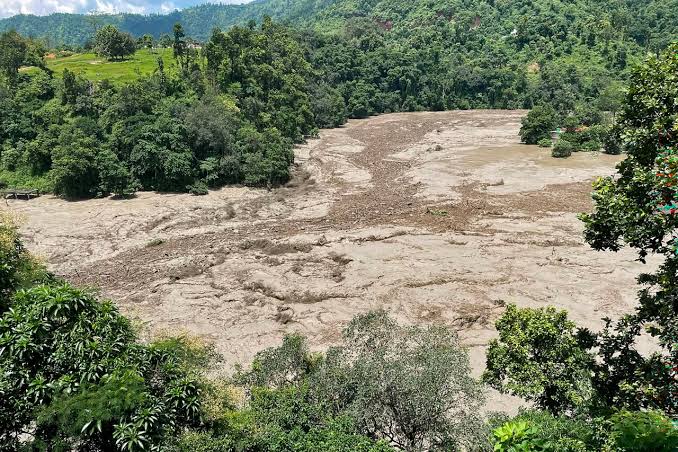
A devastating flash flood in Nepal’s Rasuwa district near the Tibet border has killed at least eight people and left hundreds missing after the Bhotekoshi River suddenly surged on Wednesday. The disaster swept away villages, roads, bridges and hydropower infrastructure, while rescue operations have been hampered by severe damage and difficult terrain.
Hundreds Reported Missing
Authorities have reported 384 people missing, including 291 foreign nationals. The missing include tourists from India, the United States, the United Kingdom, Malaysia and several other countries.
The scale of the disaster remains unclear, and officials have warned that the number of casualties could increase as rescue teams reach areas that have been cut off by floodwaters and landslides.
Villages and Infrastructure Swept Away
The worst-hit areas include Syapru Besi and Timure in Rasuwa district. Floodwaters swept through settlements along the Bhotekoshi River, destroying homes, roads and bridges.
Television footage and eyewitness accounts showed vehicles being carried away by floodwaters and bridges collapsing as the river rose rapidly.
The disaster also damaged the Gyirong border crossing between Nepal and China, disrupting road, electricity and communication links in the region.
Hydropower Projects Disrupted
Nepal’s energy ministry reported that approximately 430 megawatts of electricity capacity had been affected by the disaster. This represents more than 12% of the country’s total hydropower capacity of around 3.2 gigawatts.
Several hydropower projects and related infrastructure were damaged or disrupted as floodwaters and debris moved downstream.
Rescue Efforts Underway
Nepalese police and military personnel have joined rescue operations, while authorities have ordered people living in lower-lying areas near rivers to move to safer locations.
However, rescue efforts have faced major challenges. High water levels have prevented helicopters from landing in some of the worst-affected areas, while damaged roads and bridges have made ground access difficult.
READ MORE: US Pauses Immigrant Visa Appointments Worldwide Amid New Screening Drive
The Nepalese government has also sought assistance from India and China for rescue operations.
Possible Glacier-Related Trigger
The exact cause of Wednesday’s flooding has not yet been fully established.
Climate experts have suggested that an ice-and-rock avalanche from a glacier may have triggered the sudden surge in the Lhende Khola, a tributary of the Bhotekoshi River. The river had previously experienced a deadly flash flood in 2025.
Experts have warned that rising temperatures in the Himalayan region are increasing the risks associated with melting glaciers, glacial lake outbursts, landslides and sudden flooding.
China Also Affected
The disaster has had consequences on the Chinese side of the border. Mudslides reached the Gyirong area of Tibet, damaging infrastructure and cutting power and communication links.
Chinese President Xi Jinping called for intensive search-and-rescue efforts and stronger monitoring and early-warning systems to prevent further casualties.
Authorities Warn of Further Danger
Officials have urged residents living near the Bhotekoshi, Trishuli and Narayani rivers to remain alert and stay away from riverbanks as rescue and recovery operations continue.
With hundreds of people still unaccounted for and several areas inaccessible, the full scale of the disaster is expected to become clearer as emergency teams reach affected communities.