
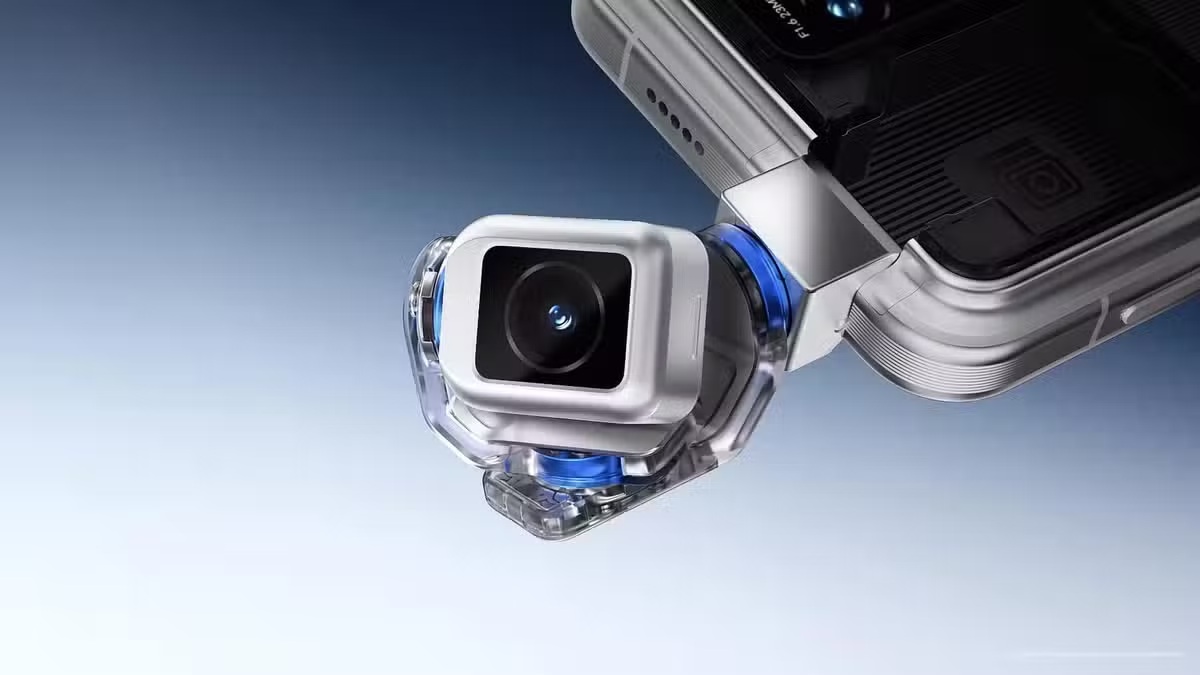
HONOR has officially introduced its futuristic Robot Phone, a smartphone that combines a mechanically moving camera gimbal with artificial intelligence to create a completely different approach to mobile photography and video.
The standout feature is a 200MP camera mounted on a motorized gimbal, allowing the camera module to physically move rather than remaining fixed inside the phone. HONOR says the system is designed to provide more stable footage, intelligent subject tracking and new forms of camera interaction.
A Camera That Can Actually Move
Unlike conventional smartphone cameras, the HONOR Robot Phone features a 4DoF gimbal system built into the device. The company says its micro-motor technology has been significantly miniaturized to make the mechanism practical for a smartphone.
The gimbal can physically adjust the camera’s position and orientation, giving creators more flexibility when recording videos, taking photos or making video calls.
HONOR describes the phone as a new category of smartphone designed around embodied AI, where the device can respond physically to what is happening around it.
AI Can Follow Moving Subjects
One of the most interesting features is AI Object Tracking.
Users can select a subject, after which the camera automatically keeps track of that person or object as it moves. HONOR says the system has been trained using millions of simulated scenes and can anticipate movement while adjusting the framing in real time.
Even if a subject briefly disappears behind an object, the system is designed to identify it again and resume tracking.
This could be particularly useful for vloggers, livestreamers, sports content and people who frequently record themselves without another person operating the camera.
200MP Camera Meets Mechanical Stabilisation
The Robot Phone combines its high-resolution camera with three-axis mechanical gimbal stabilisation and an AI stabilisation engine.
According to HONOR, the mechanical system responds to small movements in real time, helping compensate for camera shake during more complicated movements.
The result is intended to provide a more camera-like shooting experience than conventional optical or electronic smartphone stabilisation.
READ MORE: Qualcomm Snapdragon C: $300 Laptops with 16GB RAM & 8 Cores
AI SpinShot Adds Cinematic Movements
HONOR has also introduced AI SpinShot, which allows the camera to perform controlled rotational movements.
The feature supports 90-degree and 180-degree shooting modes, giving users a way to create dynamic camera movements without requiring additional equipment.
For mobile filmmakers and social-media creators, the feature could make cinematic-style shots easier to produce directly from a smartphone.
The Camera Can React During Calls
The Robot Phone isn’t limited to photography.
HONOR says its moving gimbal can be used during video calls to keep the camera focused on the user. The company also describes interactive behaviours in which the camera can physically move like a head, including nodding, shaking and other movements.
The phone can even respond to music by moving the camera module in rhythm, adding an unusual physical dimension to smartphone interaction.
HONOR Partners With ARRI
Another major element of the Robot Phone’s imaging system is HONOR’s collaboration with ARRI, a well-known professional cinema-camera technology company.
The partnership is focused on bringing cinematic colour expertise to mobile imaging and helping improve the visual character of footage captured with the device.
A New Direction for Smartphone Cameras
The HONOR Robot Phone represents a significant departure from the conventional smartphone camera design. Instead of simply adding larger sensors and more computational photography features, HONOR has incorporated a physical moving mechanism that allows the camera to interact with its surroundings.
With a 200MP camera, 4DoF gimbal, AI subject tracking, AI SpinShot and ARRI collaboration, the device is clearly aimed at users who want more advanced photography and video capabilities without carrying a dedicated camera or gimbal.
The bigger question will be how useful this moving-camera concept proves in everyday use—and whether the technology eventually becomes a mainstream feature across other smartphones.


