
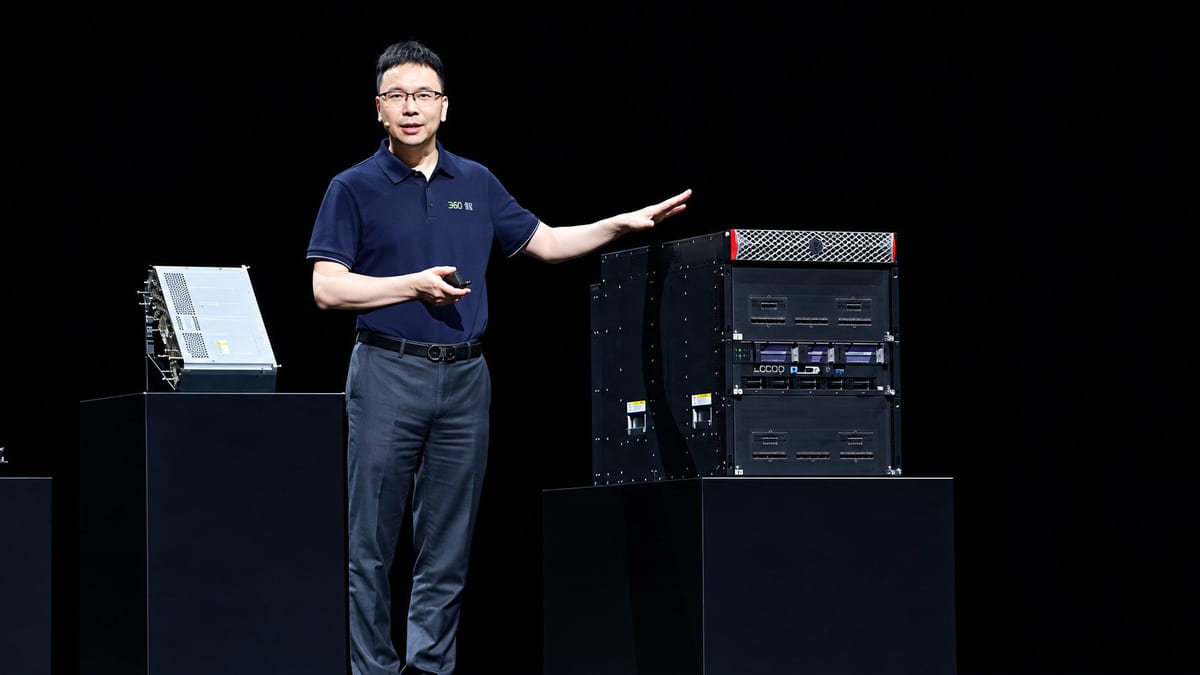
Huawei has unveiled the Atlas 960E SuperPoD, a large-scale AI computing system designed to handle the training and inference demands of increasingly powerful artificial intelligence models. Huawei describes it as the industry’s first Near-Packaged Optics (NPO)-based SuperPoD, with the ability to connect up to 4,096 NPUs in a single system.
The system was announced at HUAWEI CONNECT 2026 in Shanghai and is designed to support AI models approaching 10 trillion parameters.
Atlas 960E Designed for Massive AI Workloads
The Atlas 960E SuperPoD uses Huawei’s UnifiedBus architecture alongside its Hi-ONE optical interconnect technology. Unified memory addressing allows the connected processors to work together more like a single computing environment.
Huawei says a single SuperPoD can scale to 4,096 NPUs, delivering up to 8 EFLOPS of FP8 performance and 16 EFLOPS of FP4 performance. The company also says the system can support up to 1 petabyte of HBM capacity.
New Optical Technology Reduces Hardware Requirements
One of the major changes in the Atlas 960E is the use of Huawei’s Hi-ONE NPO optical engine.
Huawei says each Hi-ONE unit provides transmission capacity of up to 7.2 Tbit/s and includes an integrated light source. The Atlas 960E incorporates around 5,500 Hi-ONE units, replacing what Huawei says would otherwise require approximately 48,000 conventional 800G optical modules.
According to Huawei, this architecture can reduce power consumption by more than 550 kW. The company also claims the design can double fault-free operating time and provide 99.8% system availability.
READ MORE: AI Models Surpass Human Writers in New Writing Benchmark
Huawei Targets 10-Trillion-Parameter AI Models
As AI models become larger, connecting large numbers of processors efficiently has become an important challenge.
Huawei says traditional server architectures can spend more than 40% of training time on communication within large clusters. Its SuperPoD architecture is designed to reduce these communication bottlenecks by tightly connecting processors through high-speed interconnects.
The company says multiple Atlas 960E SuperPoDs can be connected into larger SuperClusters supporting up to 512,000 NPUs. With additional multi-rail architecture, Huawei says its systems can eventually scale to 1 million NPUs.
Huawei Expands Its AI Infrastructure Portfolio
The Atlas 960E is part of a broader Huawei strategy focused on building large-scale AI infrastructure.
Huawei has also introduced an upgraded TaiShan 950 SuperPoD, supporting up to 4,096 nodes and a unified memory pool of up to 256 TB. The company has also launched the OceanStor M900, a storage system designed to provide petabyte-scale key-value caching for AI workloads.
The company is simultaneously advancing its Ascend processor roadmap. Huawei says the Ascend 960DT is scheduled for the first quarter of 2027, while the Ascend 960PR is expected in the third quarter of 2027. The Ascend 970 and 980 are planned for 2028 and 2029, respectively.
Atlas 960E Launch Timeline
Huawei has announced the Atlas 960E SuperPoD, but the system is scheduled for Q3 2027 rather than immediate commercial availability.
The announcement comes as Huawei continues expanding its AI hardware ecosystem in China. Reuters reports that the company is seeing strong domestic demand for its AI computing products while working to increase production and develop newer generations of Ascend processors.
Huawei Atlas 960E SuperPoD Specifications
| Feature | Specification |
|---|---|
| Product | Atlas 960E SuperPoD |
| Launch | Q3 2027 |
| Maximum NPUs | 4,096 |
| Target AI Models | Up to 10 trillion parameters |
| FP8 Performance | 8 EFLOPS |
| FP4 Performance | 16 EFLOPS |
| HBM Capacity | Up to 1 PB |
| Optical Technology | Hi-ONE NPO |
| Transmission Capacity | 7.2 Tbit/s per Hi-ONE |
| Optical Units | Around 5,500 |
| Interconnect | UnifiedBus |
| Cooling | Fully liquid-cooled |
| Claimed Power Reduction | More than 550 kW |
| Claimed Availability | 99.8% |


