
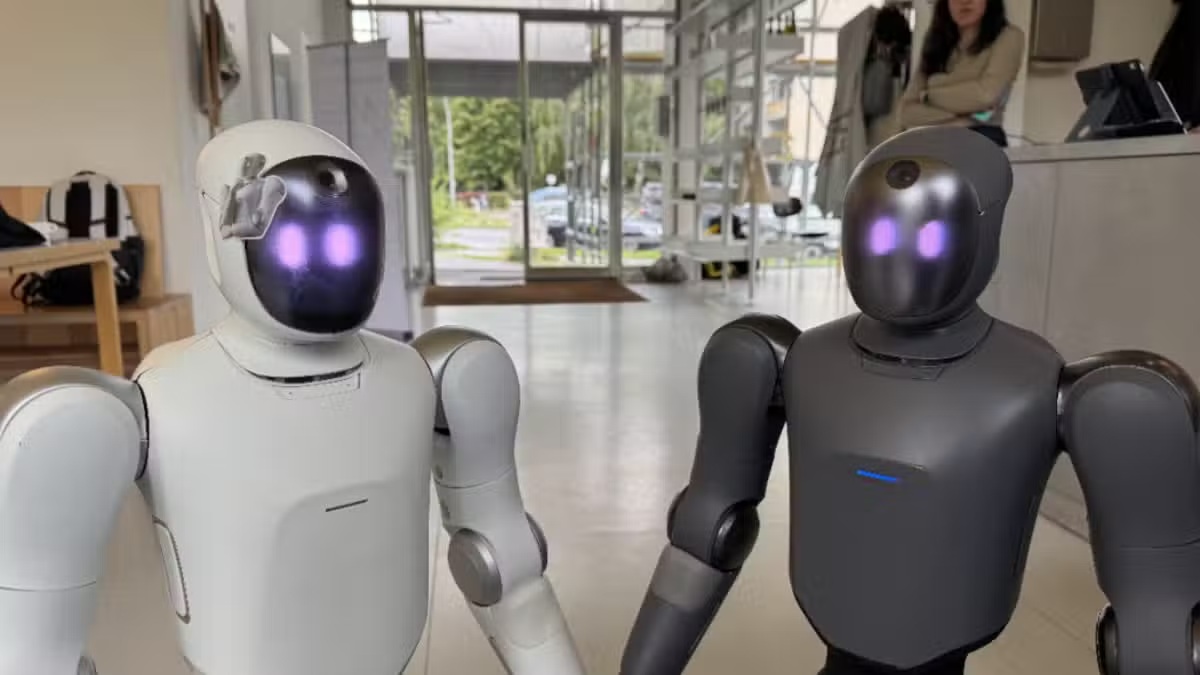
Humanoid robots are moving closer to becoming part of everyday household life as advances in artificial intelligence, robotics, sensors and physical dexterity make machines increasingly capable of performing tasks in human environments.
For years, humanoid robots have largely been demonstrated in factories, warehouses and controlled environments. However, the industry is now increasingly exploring home-based robots that could assist with cleaning, carrying objects, household chores and other everyday activities.
From Factories to Living Rooms
The traditional approach has been to deploy humanoid robots in factories and warehouses first, where environments are more predictable. Companies such as Tesla and Boston Dynamics have been developing humanoid systems primarily for industrial applications.
But some robotics companies are now taking a different route by developing robots specifically with homes in mind. Fauna Robotics, for example, has developed Sprout, a humanoid robot designed as a developer platform that can be trained and programmed for different applications.
The broader idea is to create a general-purpose machine capable of operating in spaces designed for humans without requiring major changes to the home.
READ MORE: Iran’s Grip on Hormuz Forces US to Change Tanker Defence Strategy
AI Is Changing What Robots Can Do
The biggest development behind the latest generation of humanoid robots is the combination of robotics with advanced AI.
Modern systems can increasingly use cameras and sensors to understand their surroundings, interpret instructions and navigate physical environments. This could eventually allow robots to perform tasks that previously required detailed programming for every individual movement.
However, the technology is still developing. Experts continue to identify challenges involving dexterity, reliability, battery life, safety and cost, particularly when robots have to operate in unpredictable household environments.
The Biggest Challenge: Making Robots Useful and Affordable
Walking like a human is only one part of the challenge. A household robot would need to reliably perform useful tasks such as picking up different objects, opening doors, handling fragile items, cleaning and responding safely when something unexpected happens.
Cost is another major obstacle. Some current humanoid platforms remain extremely expensive, with early systems costing tens of thousands of dollars.
For mass adoption, manufacturers will need to significantly reduce prices while improving reliability and battery endurance.
Are Humanoid Robots Really Ready for Homes?
The answer is not quite yet, but the technology is moving in that direction.
Humanoid robots are becoming more capable and developers are increasingly focusing on practical applications rather than demonstrations alone. Still, widespread household adoption will depend on whether manufacturers can deliver robots that are safe, reliable, affordable and genuinely useful.
If those challenges are solved, the long-promised idea of a robot assistant at home could move from science fiction to reality much sooner than expected.


