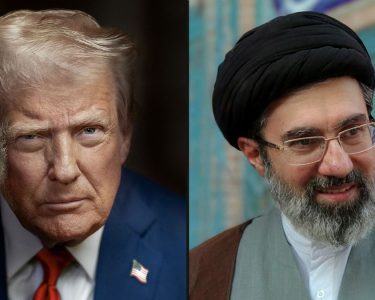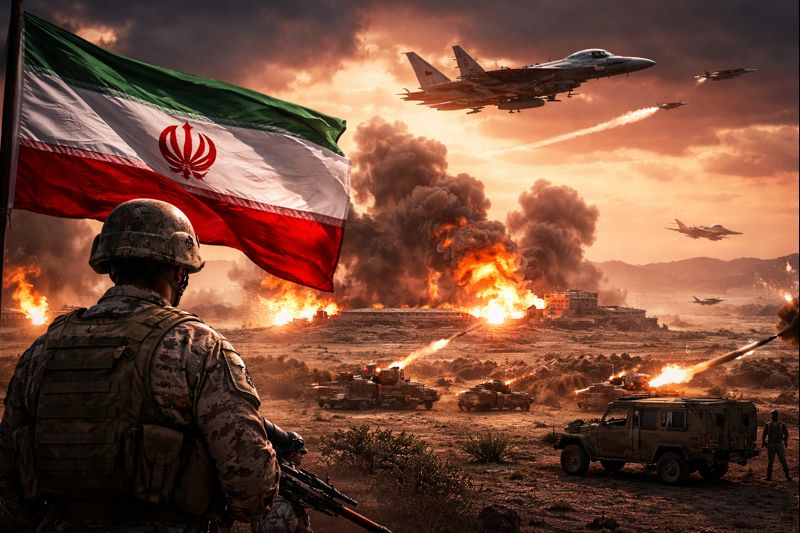
Iran has issued a strong warning stating that Iran targets U.S. bases in Middle East if the United States launches any military action against it, escalating tensions across the region. Iranian officials said American military installations spread across several Middle Eastern countries would become legitimate targets in the event of an attack on Iran.
The warning comes amid sharply escalating tensions following recent remarks by U.S. President Donald Trump, who publicly encouraged Iranian citizens to continue nationwide protests against their government. Trump framed the demonstrations as a struggle against oppression and cautioned Tehran that “very strong action” could follow if protesters are executed, though he stopped short of outlining specific measures.
Iran is currently facing its most serious internal unrest since the 1979 Islamic Revolution. According to the U.S.-based human rights organization HRANA, the government’s crackdown has resulted in at least 2,561 deaths. The reported toll includes 2,403 protesters, 147 individuals affiliated with government forces, 12 minors, and 9 civilians. Iranian authorities, however, reject these figures and continue to blame the violence on what they describe as “terrorist elements” targeting security personnel, mosques, and public infrastructure.
Also Read:
Iran Protests 2026: US Reviews Military Options as Tehran Demonstrations Escalate
Diplomatic engagement between Tehran and Washington has also deteriorated. Direct talks between Iranian Foreign Minister Abbas Araghchi and U.S. special envoy Steve Wittkoff have reportedly been suspended, signaling a freeze in already fragile communication channels. At the same time, Israeli intelligence sources indicate that Prime Minister Benjamin Netanyahu’s security cabinet has been briefed on scenarios involving possible U.S. military intervention or efforts at regime change in Iran—developments unfolding just months after a brief but intense 12-day conflict between Israel and Iran.
Iran has intensified diplomatic outreach to regional partners as well. Senior officials, including Araghchi, have contacted their counterparts in Qatar, the UAE, and Turkey, emphasizing Iran’s resolve to protect its sovereignty and national security against any foreign interference. Ali Larijani, head of Iran’s top security body, also held discussions with Qatar’s foreign minister, reiterating that Tehran is fully prepared to respond to external threats.
Meanwhile, Iran’s judiciary has moved swiftly amid the unrest. Chief Justice Gholam Hossein Mohseni Ejei recently visited a detention center in Tehran and ordered that protesters accused of attacking civilians, security forces, or public property be prosecuted without delay. Authorities are reportedly preparing open trials for high-profile cases, with proceedings expected to be accessible to the media.
Signs of growing regional concern are also emerging. U.S. personnel stationed at Qatar’s Al Udeid Air Base—the largest American military installation in the Middle East, hosting approximately 10,000 troops—have been advised to temporarily relocate away from the base. Officials describe the move as a precautionary strategic adjustment rather than a full evacuation. Nevertheless, it coincides with Iran’s renewed warning that any U.S. military action would prompt widespread retaliatory strikes on American assets throughout the region.
The unfolding standoff comes as Iran grapples with sustained domestic unrest, widely regarded as its most serious internal challenge in decades. Widespread internet shutdowns have limited independent reporting, but videos verified by the BBC show security forces firing on demonstrators, lending credibility to HRANA’s casualty estimates.
As diplomatic channels narrow and military posturing intensifies, the situation remains volatile, with regional stability hanging in the balance amid the risk of a broader confrontation.