
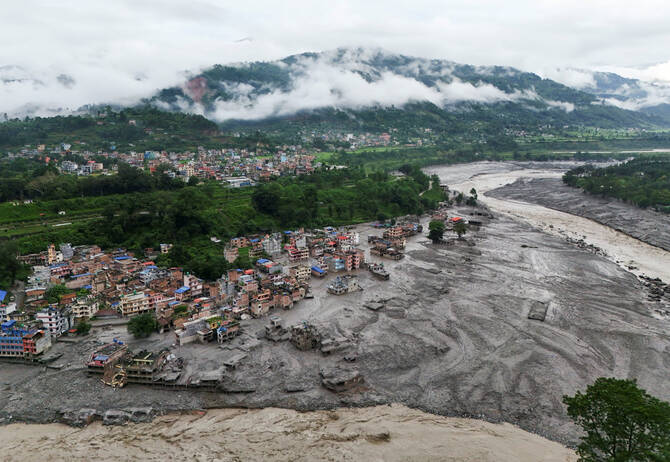
A devastating flash flood in Nepal and Tibet has left nearly 1,500 people missing, including hundreds of foreign tourists and pilgrims, after a massive collapse in the Himalayan region triggered torrents of water, mud and rocks.
The disaster struck areas along the Nepal-China border, destroying homes, roads, bridges and other infrastructure. Rescue teams are continuing their search for survivors as the death toll rises.
Hundreds of Foreign Tourists Among Missing
Authorities in Nepal reported hundreds of missing people, with a significant number believed to be foreign nationals. Many were tourists, workers and pilgrims travelling through the mountainous region.
The affected area is a popular route for people travelling toward religious sites and trekking destinations. Officials from several countries are working to determine the whereabouts of their citizens.
The scale of the disaster has made it difficult to establish an accurate list of missing people because communications and transport links have been severely disrupted.
Glacial Collapse Triggered Massive Flooding
The flash floods were linked to a glacial collapse in the Himalayas, which sent an enormous mixture of water, ice, mud and rocks into downstream areas.
The resulting debris flow travelled through valleys and communities, sweeping away buildings and infrastructure. Earlier reports considered the possibility that seismic activity had contributed to the disaster, but subsequent assessments pointed toward the glacial collapse as the primary trigger.
READ MORE: Meet the Pakistani Creators Teaching a Nation to Learn AI
Rescue Operations Underway
Nepal has mobilised military and emergency personnel to search for survivors and recover those who died. Helicopters are being used to reach isolated communities and deliver food, tents and other emergency supplies.
Rescue efforts have been complicated by damaged roads and bridges, difficult Himalayan terrain and continuing risks in flood-affected areas.
China is also conducting rescue operations on the Tibet side of the border, where people have been reported missing and casualties have been confirmed.
Infrastructure Destroyed
The floods caused extensive destruction across affected communities. Powerful currents carrying mud and rocks damaged homes, roads and bridges, leaving some areas inaccessible by road.
The destruction of transportation and communication infrastructure is creating additional challenges for rescue teams trying to reach isolated populations.
Authorities have warned that the situation remains dangerous and that the death toll could increase as rescue workers gain access to areas that were previously cut off.
International Support
Neighbouring countries and international organisations are responding to the disaster. Emergency supplies are being delivered to affected communities, while governments are working to establish the status of missing foreign nationals.
The disaster has also renewed concerns about the growing risks faced by communities in the Himalayan region as glaciers and other mountain environments become increasingly vulnerable to changing climatic conditions.
Search for Survivors Continues
Rescue teams remain focused on finding survivors and accounting for those still missing. With nearly 1,500 people reported missing across Nepal and Tibet, families and governments are waiting for further information.
Officials have cautioned that casualty and missing-person figures are still being updated as search operations continue.
Key Facts
- Location: Nepal-China border and surrounding Himalayan region
- Disaster: Flash floods and landslides
- Likely trigger: Glacial collapse
- Missing: Nearly 1,500 people across Nepal and Tibet
- Victims: Local residents, workers, tourists and pilgrims
- Response: Helicopter-led search, rescue and emergency relief operations
- Situation: Rescue operations are ongoing


