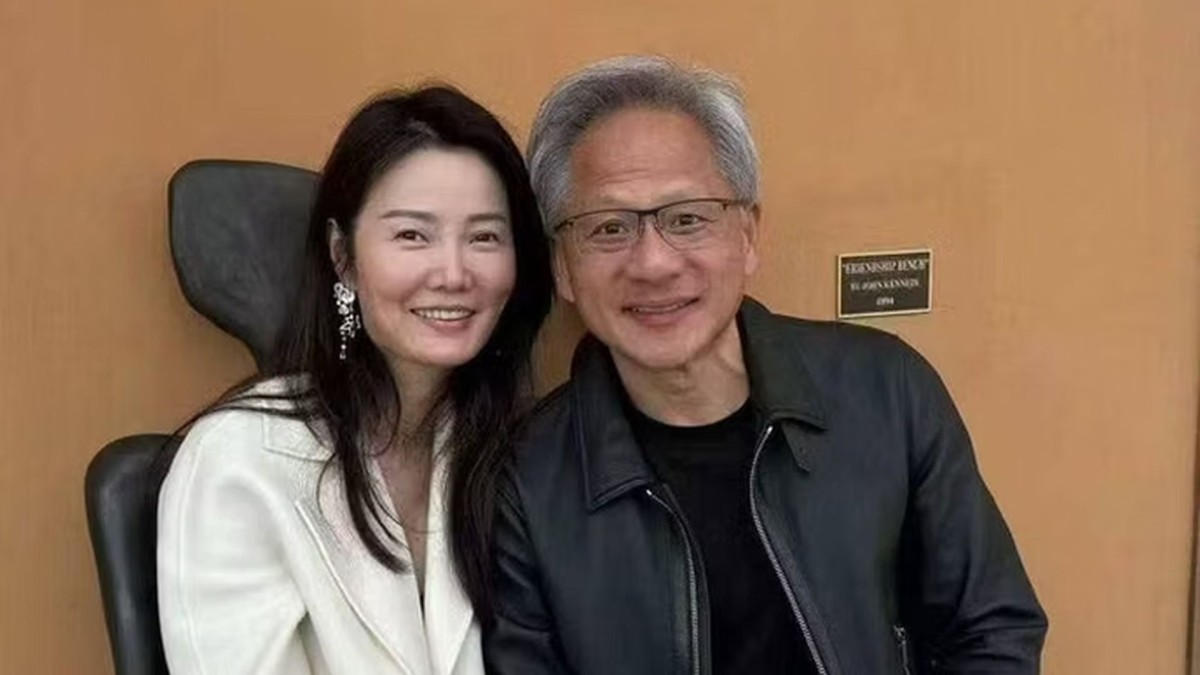
The Nvidia Alice Huang affair, one of the strangest corporate scandals of the year, took a new turn this week. US intelligence officials told congressional staff that they have found no evidence Beijing directed Alice Huang to spy on Nvidia chief executive Jensen Huang. They said China’s Ministry of State Security may have been watching her, and that serious questions remain about how advanced Nvidia chips ended up in China.
The findings were shared on Tuesday, November 24, during a two-hour closed-door briefing for staff of the House and Senate Intelligence Committees. The New York Times first reported the briefing. According to CBS News reporting, officials said there was “no indication to date” that she had been tasked to gather information on Jensen Huang, or that she had passed along anything of significant value.
No one has been charged with espionage in the case. Alice Huang has not commented publicly, and her whereabouts are unclear.
Who is Alice Huang?
Alice Huang, also known as Huang Le, is a Chinese national who lives in Hong Kong, according to documents cited in news reports. She is not related to Jensen Huang. In 2019 she sold a cloud computing business to the Chinese gaming company 7Road. A Singapore subsidiary of 7Road was later spun off as Megaspeed, an AI computing firm that became an Nvidia cloud partner in 2023.
Singapore authorities have described her as Megaspeed’s chief executive, chairperson and key controller. Megaspeed says she left the company in August 2025, denies any wrongdoing, and says its business is legitimate.
She and Jensen Huang were first seen together in public in December 2023. Earlier this month, Jensen Huang acknowledged that he had an extramarital affair, after reports that US officials had raised concerns about the relationship.
How the scandal unfolded
- June 2025: Alice Huang flew to Singapore for an interview with US export-control investigators. Singapore police questioned her the same day and held her passport, according to CBS News.
- February 2026: Singapore returned her passport, issued her a formal warning, barred her from returning, and said there was not enough evidence to charge her over false declarations about server purchases.
- November 2026: Reports that US officials were concerned about the relationship became public. The Information reported that Megaspeed had facilitated at least $7.5 billion in Nvidia chip shipments to Chinese companies, and Taiwan revoked Alice Huang’s entry permit.
- November 12: Jensen Huang resigned as Nvidia’s CEO.
- November 23: The US Commerce Department added Megaspeed and its affiliates to its Entity List, a trade blacklist. On the same day, Nvidia’s board reinstated Jensen Huang as CEO, less than two weeks after he stepped down.
- November 24: Intelligence officials briefed congressional staff.
Nvidia investors went through a rough few weeks. Before the reinstatement, Nvidia had lost about $1.6 trillion in market value and was heading for its longest weekly losing streak since 2012.
The bigger issue: Nvidia chips reaching China
The spying claims have drawn the most attention, but the more serious questions for Washington concern US export controls. These rules ban the sale of Nvidia’s most advanced AI chips to China.
The Financial Times reported that a network of companies linked to Alice Huang may have helped move Nvidia chips through Southeast Asia. Singapore suspects that servers built by Supermicro and ordered through Megaspeed may have gone to Malaysia, and that “some or all” of them may then have gone on to China. Supermicro told CBS News that Megaspeed “is not, and has never been, a Supermicro customer,” and said it has fully cooperated with US and Taiwanese officials. Malaysian Prime Minister Anwar Ibrahim said there was “no indication” that the chips were re-exported from Malaysia.
A separate CNBC investigation used corporate records gathered by the private intelligence firm Tesari. It linked businesses connected to Alice Huang to a data center whose main customer was Huawei Cloud. Huawei, Nvidia’s biggest Chinese rival, is preparing its own next-generation AI chip. Tesari analyst Brian Andersen told CNBC that if investigators found unauthorized transfers, possible charges “might include export-control violations, conspiracy and smuggling.”
Two US criminal investigations are reportedly under way, involving Megaspeed and Supermicro. Administration officials have told Nvidia that Jensen Huang is not a target of the Justice Department, but CBS reported that those assurances did not extend to Alice Huang.
What Singapore and Beijing say
Singapore has said its investigation concerned possible false declarations about server purchases, not espionage. Speaking in Australia this week, Prime Minister Lawrence Wong said there were no grounds to prosecute Alice Huang, and that investigations into Megaspeed are continuing.
Beijing has rejected the allegations. China’s Foreign Ministry called the spying claims “groundless speculation,” and an editorial in the state-run China Daily criticized what it called a politicized reading of “national security.”
What happens next
Jensen Huang is expected in Washington next week for a closed-door session with House lawmakers and public testimony before the Senate Banking Committee. Some China hawks in Congress are pushing for a wider inquiry into how the chips reached China and how the administration handled the case.
Officials cautioned that the intelligence assessment could change as investigators learn more. For now, the case is less about a spy story and more about whether US export controls on Nvidia chips can actually be enforced.