
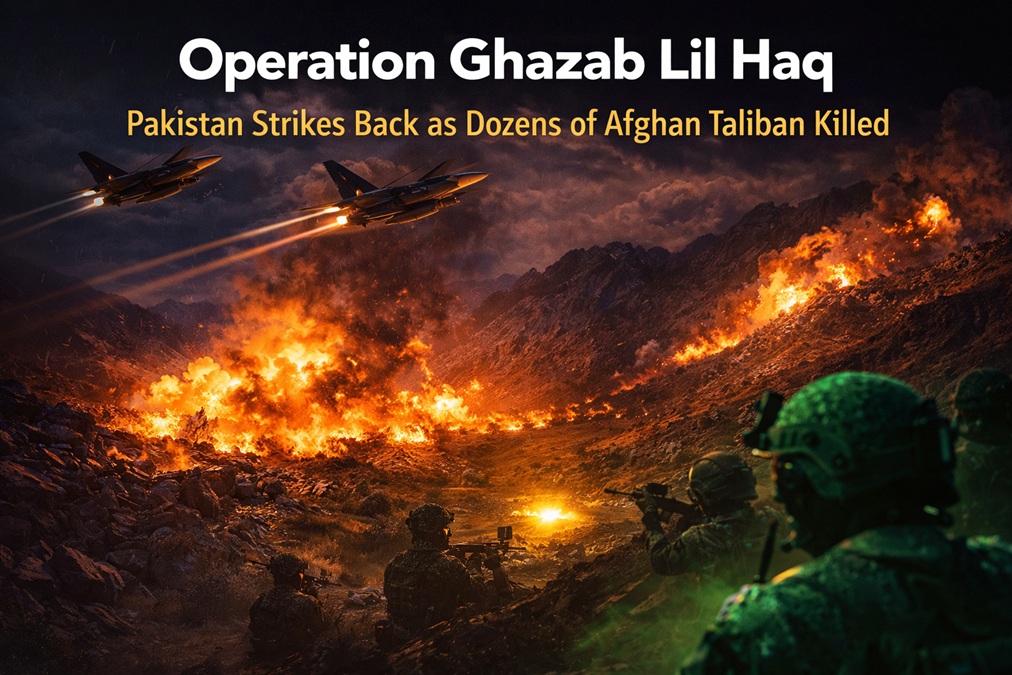
In a significant escalation of regional tensions, Operation Ghazab Lil Haq has emerged as Pakistan’s latest military response along the Afghanistan border, where dozens of militants were reportedly killed in targeted strikes.
The operation comes amid a sharp rise in cross-border attacks and security threats. Pakistani forces launched coordinated strikes targeting militant hideouts believed to be operating from Afghan territory. According to security sources, the action was based on credible intelligence and aimed at dismantling networks responsible for recent terrorist incidents inside Pakistan.
The strikes reportedly targeted multiple locations, resulting in heavy militant casualties. Officials stated that the operation was carefully planned to neutralize threats while minimizing collateral damage.
This development follows a series of deadly attacks in Pakistan, including incidents in border regions that have been linked to militant groups operating across the frontier. In response, Pakistan has intensified its stance, signaling a zero-tolerance approach toward terrorism.
Also Read:
Pakistani Security Forces Thwart Infiltration Attempt from Afghanistan, Neutralize Six Militants
The broader context of Operation Ghazab Lil Haq aligns with the ongoing 2026 border conflict between Pakistan and Afghanistan, where cross-border tensions have significantly escalated. Military actions, including airstrikes, have been carried out in provinces such as Nangarhar, Khost, and Paktika to target militant camps.
Pakistani authorities maintain that these operations are necessary to ensure national security and protect civilians from further attacks. However, officials in Afghanistan have raised concerns, claiming civilian areas were affected—an allegation Pakistan has strongly denied.
The situation remains fluid, with diplomatic channels under pressure as both countries navigate rising hostilities. Analysts warn that continued escalation could further destabilize the region if de-escalation measures are not taken soon.


