
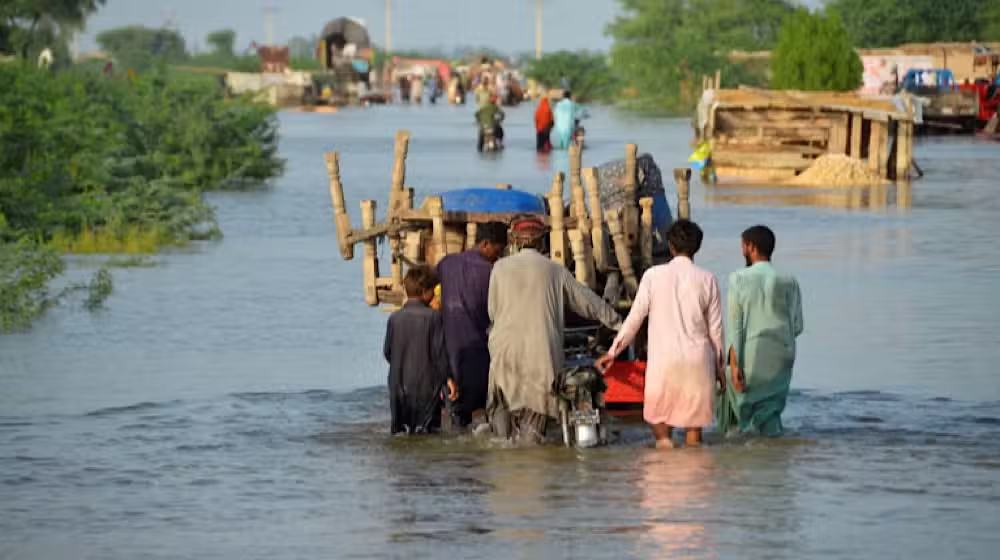
The devastating floods of 2025 have wreaked havoc across Pakistan, causing severe loss of life, widespread displacement, and massive damage to infrastructure and livelihoods. According to a preliminary report by the Planning Commission, the floods have claimed 863 lives, injured 1,147 people, and destroyed thousands of homes, bridges, and roads.
More than 6,200 livestock have been lost and 672 kilometers of roads damaged, while 239 bridges have collapsed across multiple provinces, including Punjab, Khyber Pakhtunkhwa (KP), Sindh, Balochistan, Gilgit-Baltistan (GB), Azad Jammu and Kashmir (AJK), and Islamabad.
READ MORE: Gold Prices Hit Another Record High in Pakistan
The Planning Commission confirmed that a comprehensive economic loss assessment will be finalized within two weeks to guide recovery and rehabilitation efforts.
Province-Wise Impact
Punjab
- Deaths: 216
- Injuries: 625
- Houses Damaged: 232
- Livestock Lost: 121
Khyber Pakhtunkhwa (KP)
- Deaths: 484
- Injuries: 355
- Houses Damaged: 4,666
- Livestock Lost: 5,460
- Roads Damaged: 432 km
- Bridges Destroyed: 52
Sindh
- Deaths: 58
- Injuries: 78
- Houses Damaged: 231
Balochistan
- Deaths: 26
- Injuries: 5
- Houses Damaged: 781
- Livestock Lost: 62
- Roads Damaged: 13 km
- Bridges Destroyed: 3
Gilgit-Baltistan (GB)
- Deaths: 87
- Injuries: 52
- Houses Damaged: 1,253
- Livestock Lost: 67
- Roads Damaged: 20 km
- Bridges Destroyed: 87
Azad Jammu and Kashmir (AJK)
- Deaths: 30
- Injuries: 29
- Houses Damaged: 2,078
- Livestock Lost: 239
- Roads Damaged: 201 km
- Bridges Destroyed: 94
Islamabad
- Deaths: 8
- Injuries: 3
- Houses Damaged: 65
- Bridges Destroyed: 3
Government Response
The floods have once again exposed Pakistan’s vulnerability to climate-induced disasters, echoing the devastation of the 2022 floods. In response, the government has evacuated 936,000 people and established 1,378 relief camps to provide immediate shelter and assistance.
The Reconstruction and Rehabilitation Unit (RRU) has been activated to coordinate damage assessments and recovery work in collaboration with provincial and federal authorities.
Authorities have emphasized the need to integrate climate-resilient frameworks into national development strategies to ensure both short-term relief and long-term preparedness against future disasters.


