
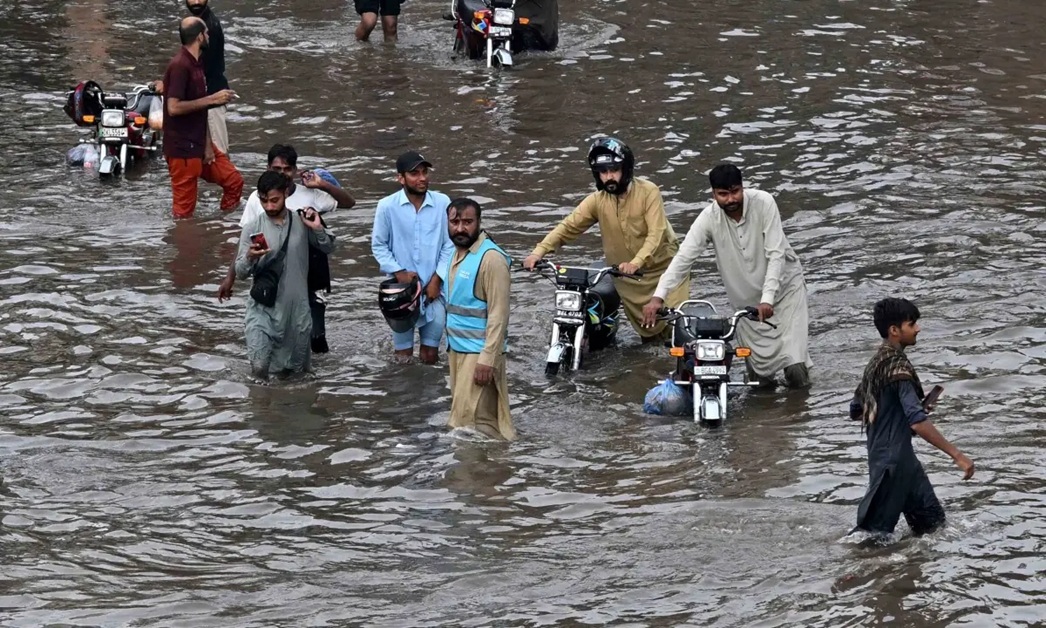
The death toll from Pakistan’s ongoing monsoon rains, flash floods, and landslides has risen to 110, according to the National Disaster Management Authority (NDMA). Since the start of the monsoon season on June 26, the severe weather has also left 360 people injured and damaged nearly 800 homes across the country.
Punjab has recorded the highest number of casualties, followed by Khyber Pakhtunkhwa, Sindh, Balochistan, Azad Jammu and Kashmir, and Gilgit-Baltistan. Many of the fatalities were caused by collapsing buildings, flash floods, electrocution, and rain-related accidents.
The NDMA has urged provincial authorities to remain on high alert as another spell of heavy rainfall is forecast in several parts of the country. Emergency response teams have been deployed, while local administrations have been directed to improve rescue operations, ensure timely evacuations, and assist affected communities.
Heavy rainfall has triggered widespread urban flooding, road closures, and disruptions to transportation in several cities. In mountainous regions, flash floods and landslides have blocked highways and isolated remote communities, making rescue efforts more challenging.
READ MORE: Yemen Warns Houthis Are Trying to Replicate Iran’s Hormuz Strategy in the Red Sea
Weather experts have warned that additional downpours in the coming days could worsen flooding in low-lying areas and along rivers. Citizens have been advised to avoid unnecessary travel, stay away from flooded roads and streams, and follow safety advisories issued by the Pakistan Meteorological Department and local authorities.
As Pakistan continues to face increasingly intense weather events, disaster management officials are calling for stronger climate resilience measures, improved drainage infrastructure, and enhanced early warning systems to reduce the impact of future monsoon disasters.


