
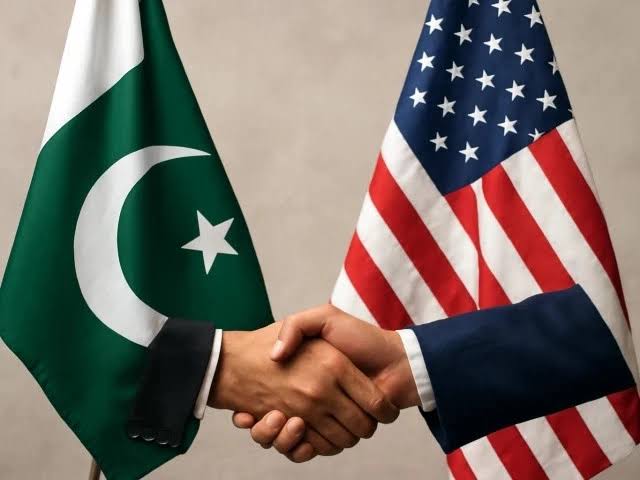
Pakistan and the United States have moved closer to finalising a proposed bilateral trade agreement after making substantial progress in negotiations. Officials from both countries have agreed to continue discussions on the remaining technical issues as they seek to expand trade, improve market access, and strengthen economic cooperation.
Pakistan’s Commerce Secretary Jawad Paul confirmed the progress on October 20, 2026. The development followed a meeting between Federal Commerce Minister Jam Kamal Khan and US Chargé d’Affaires Natalie A. Baker in Islamabad.
The discussions covered agricultural exports, industrial investment, minerals, technology, trade financing, and opportunities to increase bilateral commerce. Both sides expressed their willingness to maintain engagement and address outstanding issues.
However, the proposed trade agreement has not yet been formally concluded. Some provisions still require further discussion with the Office of the United States Trade Representative (USTR).
Pakistan and US Make Progress on Trade Agreement
The latest discussions represent another step in Pakistan’s efforts to strengthen its commercial relationship with the United States.
According to the Commerce Division, negotiations have advanced on several important provisions of the proposed reciprocal trade agreement. Officials are now working through the remaining technical matters before the agreement can be finalised.
Commerce Secretary Jawad Paul said that further engagement with the USTR would be needed to resolve the outstanding points.
The October 20 meeting brought together senior officials from Pakistan’s Ministry of Commerce and representatives of the US government to review the progress achieved so far.
Prime Minister’s Coordinator for Commerce and Industries Rana Ihsan Afzal Khan also participated in the discussions.
While the latest progress is encouraging for businesses looking for stronger trade links between the two countries, the final outcome will depend on the resolution of outstanding issues and the terms eventually agreed by both sides.
READ MORE: Pakistan Gets Biggest Fuel Price Relief Since August as Petrol and Diesel Rates Drop
Pakistan Seeks Better US Market Access for Mangoes and Dates
Agricultural exports were among the key subjects discussed during the meeting.
Pakistan asked the United States to accelerate the inspection process required for Pakistani mango exports. Faster coordination with US inspection teams could help exporters address procedural delays and improve access to the American market.
Officials also highlighted opportunities to export dates from Balochistan to the United States.
Pakistan produces a variety of agricultural products, but expanding exports to international markets often requires compliance with specific food safety, inspection, packaging, and quality standards.
Improved market access could create additional opportunities for Pakistani farmers, exporters, food processors, and businesses involved in agricultural supply chains.
The US delegation indicated that it would coordinate with the relevant authorities to address market-access issues affecting Pakistani agricultural products.
If these efforts lead to smoother export procedures, businesses could have more opportunities to reach American buyers. However, the scale of any future increase will depend on regulatory requirements, demand, pricing, and exporters’ ability to meet international standards.
Pakistan Discusses Imports of American Cotton and Soybeans
The two countries also discussed opportunities to expand Pakistan’s imports of US agricultural products, particularly cotton and soybeans.
Increasing agricultural trade in both directions could help diversify the range of products exchanged between the two countries.
For Pakistan, imports of agricultural commodities can support domestic industries and supply chains. Cotton is important for the textile sector, while soybeans are used in food production and animal feed.
For American suppliers, greater access to Pakistan’s market could create additional commercial opportunities.
The discussions also covered trade financing, which can help businesses manage the costs and risks associated with international transactions.
Any expansion in agricultural trade would depend on commercial terms, domestic demand, import requirements, prices, and the final arrangements reached by both governments.
US Companies Invited to Invest in Pakistan
Commerce Minister Jam Kamal Khan invited American companies to explore investment opportunities in Pakistan’s agricultural and industrial sectors.
The minister highlighted potential areas for cooperation, including modern farming, food processing, cold-chain infrastructure, and value-added agricultural products.
Investment in these areas could help improve storage, reduce post-harvest losses, strengthen processing capacity, and increase the value of products before they reach export markets.
Pakistan also highlighted opportunities in Balochistan, particularly in the processing and commercial development of dates and olive oil.
Developing modern processing and storage facilities could help local producers improve product quality and serve larger domestic and international markets.
However, attracting investment will depend on factors such as infrastructure, financing, regulatory clarity, market access, and the commercial viability of individual projects.
Minerals and Mining Among Key Areas of Cooperation
Minerals and mining were also discussed during the meeting, with the US delegation expressing interest in greater investment and technical cooperation in Pakistan’s mineral sector.
Pakistan has identified mineral development as an area with potential for industrial growth and export diversification. Investment could support exploration, processing, infrastructure, and the development of industries that use locally available mineral resources.
Cooperation with international companies could also provide access to specialised technology, technical expertise, and investment capital.
For Pakistan, the potential benefits would depend on the development of commercially viable projects and the establishment of suitable regulatory and operational arrangements.
The meeting also highlighted Hub in Balochistan as a potential destination for manufacturing, industrial investment, and special economic zones.
These opportunities remain subject to further engagement and the decisions of companies considering investment in Pakistan.
FoodAg 2026 Opens Another Opportunity for US Businesses
During the discussions, Jam Kamal invited American companies to participate in FoodAg 2026, scheduled to take place in Karachi from November 23 to 26.
The event is intended to provide opportunities for businesses to explore Pakistan’s agricultural products, food-processing capabilities, and potential export partnerships.
Participation could help international companies connect with local producers, processors, exporters, and investors.
For Pakistani businesses, such events can provide a platform to showcase products and develop commercial relationships with overseas buyers.
The invitation also fits into Pakistan’s wider efforts to increase value-added exports rather than relying solely on the sale of unprocessed agricultural commodities.
The commercial impact of the event will depend on the partnerships, investment discussions, and business agreements that emerge from participation.
Regional Trade Routes and Connectivity Also Discussed
The meeting also covered regional trade connectivity and difficulties affecting overland routes to Afghanistan and Central Asian markets.
Commerce Secretary Jawad Paul emphasised the importance of reliable transport corridors and efficient logistics for supporting Pakistan’s exports.
Trade routes influence delivery times, transportation costs, and the ability of businesses to reach customers in regional markets.
Disruptions or inefficiencies can make exports less competitive by increasing costs and creating uncertainty for suppliers and buyers.
Improving logistics and regional connectivity could therefore support Pakistan’s efforts to diversify export destinations and strengthen commercial relationships beyond traditional markets.
The discussions highlighted that trade growth depends not only on tariffs and market access but also on practical factors such as transport infrastructure, border procedures, and the reliability of supply chains.
Why the Pakistan-US Trade Agreement Matters
The United States is an important market for Pakistani exporters, particularly businesses involved in textiles, apparel, agricultural products, and other manufactured goods.
A more comprehensive trade framework could help establish clearer arrangements for market access and encourage additional commercial cooperation.
For Pakistani exporters, improved access to American customers could create opportunities to expand sales and diversify their businesses. American companies could also benefit from opportunities to invest in Pakistan and supply products to its domestic market.
However, the benefits of a trade agreement would depend on its final provisions. Tariff arrangements, regulatory requirements, product standards, and implementation procedures can all influence how businesses benefit from an agreement.
The agreement’s practical impact will therefore become clearer once both countries disclose its final terms and explain how the arrangements will be implemented.
What Happens Next?
Pakistan and the United States are expected to continue discussions on the outstanding technical issues through the relevant trade authorities.
The Office of the United States Trade Representative remains an important participant in the process, as the two countries work towards resolving the remaining provisions of the proposed agreement.
Further discussions will determine whether the outstanding matters can be settled and what commitments will be included in the final arrangement.
Until an agreement is formally announced, businesses should not assume that proposed changes to trade conditions or market access have already taken effect.
Conclusion
Pakistan and the United States have made substantial progress towards a proposed bilateral trade agreement, but negotiations remain ongoing.
The latest discussions focused on improving access for Pakistani mangoes and dates, expanding agricultural trade, attracting American investment, developing mineral resources, and strengthening regional trade connectivity.
The outcome could create opportunities for exporters and businesses in both countries, depending on the final terms and their implementation.
For now, the main development is the progress reported by Pakistani officials and the decision to continue working on the remaining technical issues. A final agreement has yet to be announced.


