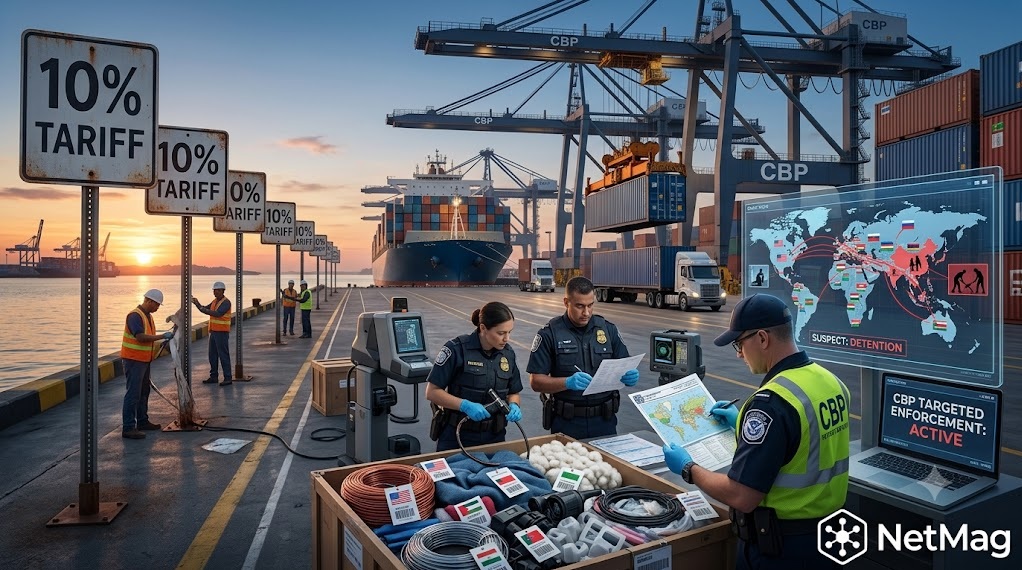
In a massive shift in United States trade policy, Trump forced labor duties have been imposed on 60 trading partners as the administration’s temporary 10% universal tariff policy officially expires. The move marks a transition from broad baseline tariffs toward targeted trade enforcement focused on human rights and supply chain compliance.
The new measures allow US Customs and Border Protection (CBP) to block imports and levy heavy penal duties on goods linked to alleged forced labor practices across key international manufacturing hubs.
Strategic Shift from Blanket Tariffs to Supply Chain Sanctions
The expiration of the 10% baseline import tariff concludes a temporary broad-market measure introduced earlier in the year. However, global supply chains face fresh disruption as Washington pivots toward targeted enforcement.
Also Read:
UAE Calls for Immediate End to Iran War, Urges Diplomacy Over Escalation
Key details of the new trade enforcement policy include:
-
Widespread Impact: The import restrictions target products across 60 nations, heavily impacting global textile, electronics, solar equipment, and agricultural supply chains.
-
Strict Border Enforcement: Goods identified under Withhold Release Orders (WROs) will be detained at US ports of entry until importers prove supply chains are entirely free of forced labor.
-
Compliance Demands: Multinational corporations must now provide end-to-end supply chain transparency, tracing raw materials back to their original production sources.
Global Market Reactions and Economic Outlook
International trade organizations and affected nations have expressed concern over the abrupt regulatory shift, warning of supply chain bottlenecks at major US ports. While human rights advocates have welcomed the crackdown on forced labor, foreign governments argue that the rapid implementation gives exporters insufficient time to verify complex multi-tier supply networks.
Industry analysts note that businesses will need to overhaul their procurement strategies to navigate the heightened scrutiny and prevent severe shipping delays.