
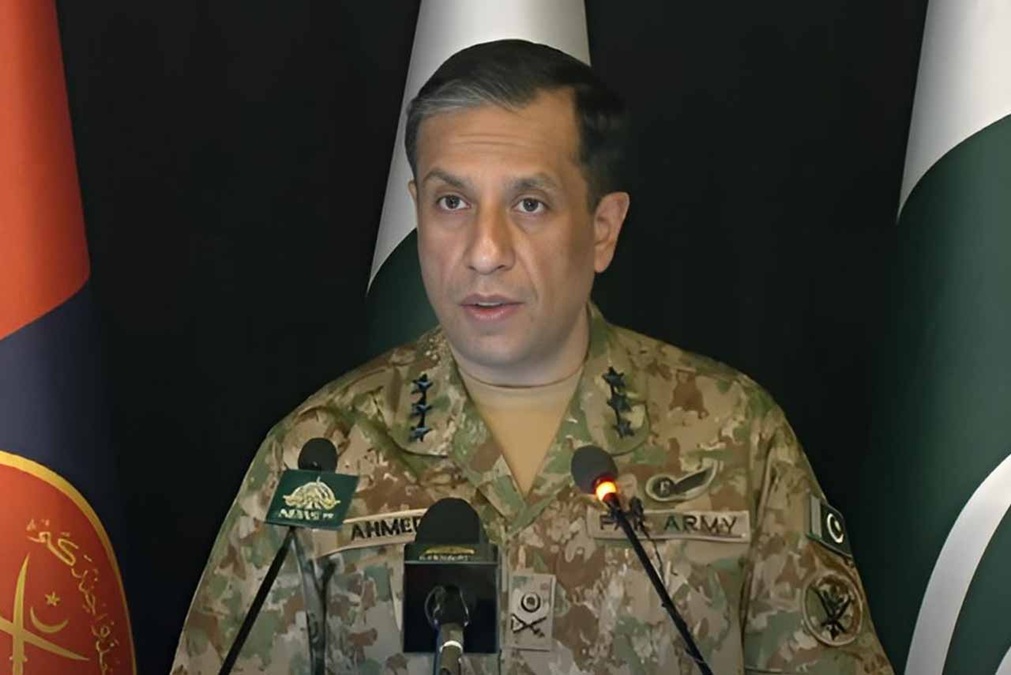
Pakistan’s military spokesperson used a press conference in Rawalpindi on October 1 to walk reporters through what he described as a telling pattern: an Indian Army account of a Kashmir operation that changed shape, and identity, several times within 48 hours. The Director General of Inter-Services Public Relations presented the shifting narrative as fresh evidence of what Pakistan has repeatedly alleged is a recurring Indian tactic staging or mislabeling incidents to fit a preferred storyline.
How India’s Account Evolved, Step by Step
According to the timeline DG ISPR laid out, the story began late on September 29, when the Indian Army’s Chinar Corps posted an update on what it called Operation Korag, describing a joint operation launched in the Korag area of Tral after specific intelligence. Indian forces said troops spotted suspicious movement, challenged the individuals involved, and came under fire in the exchange that followed with one person killed and the operation described as still ongoing.
About seven and a half hours later, on the morning of September 30, Chinar Corps issued a follow-up identifying the man killed as “Muhammad Asif,” alias Hashim Moosa, labeling him an alleged Lashkar-e-Taiba militant.
The identity then shifted again that same afternoon. Between roughly 2:20pm and 3:33pm, Indian news agency ANI reported, citing unnamed sources, that the man was allegedly a former Pakistani SSG commando also named Muhammad Asif and referenced what it described as an image of his Pakistani national identity card. Around two hours after that, India’s Ministry of Home Affairs and the Press Information Bureau confirmed the killing of an LeT commander going by the alias “Musa,” also referred to as “Asif Fauji.”
Also Read:
Pakistan Shoots Down 12 Indian Drones; 4 Soldiers Injured in Airspace Violations: DG ISPR
By the evening of September 30 and into October 1, Indian mainstream and social media were widely repeating the claim that the man was a former Pakistani SSG soldier. A separate Indian Army update said a body was later recovered during an early-morning search near Kaimbal Nala, again identified as Muhammad Asif alias Hashim Moosa, with the Army additionally claiming it had recovered weapons and equipment from the site. Indian government and PIB statements echoed the same account, and an India Today headline referenced during the press conference described the incident as a Lashkar commander named “Musa” killed in Budgam, alongside the elimination of what it called a four-member LeT group.
What Pakistan’s Military Is Pointing To
DG ISPR’s presentation placed particular emphasis on how the identification evolved from an unnamed militant, to “Muhammad Asif alias Hashim Moosa,” to the later claim that the man was a former Pakistani commando arguing that this progression, rather than a straightforward one-time identification, is itself suspicious. Pakistan’s military has framed the sequence as evidence supporting its broader allegation of an Indian false-flag operation, though it’s worth being clear that this is Pakistan’s characterization of events, and India has made no corresponding admission along those lines.
Why This Keeps Happening
This isn’t an isolated claim DG ISPR’s press conference arrived the same day NetMag was separately reporting on fake social media posts allegedly misidentifying a suspect in the earlier Pahalgam incident as an ex-Pakistani commando, suggesting Pakistani officials see this as part of a pattern rather than a one-off dispute. As of this report, the story was still developing, with both the Indian and Pakistani military establishments maintaining their respective positions and no independent, third-party verification of either account yet available.


