
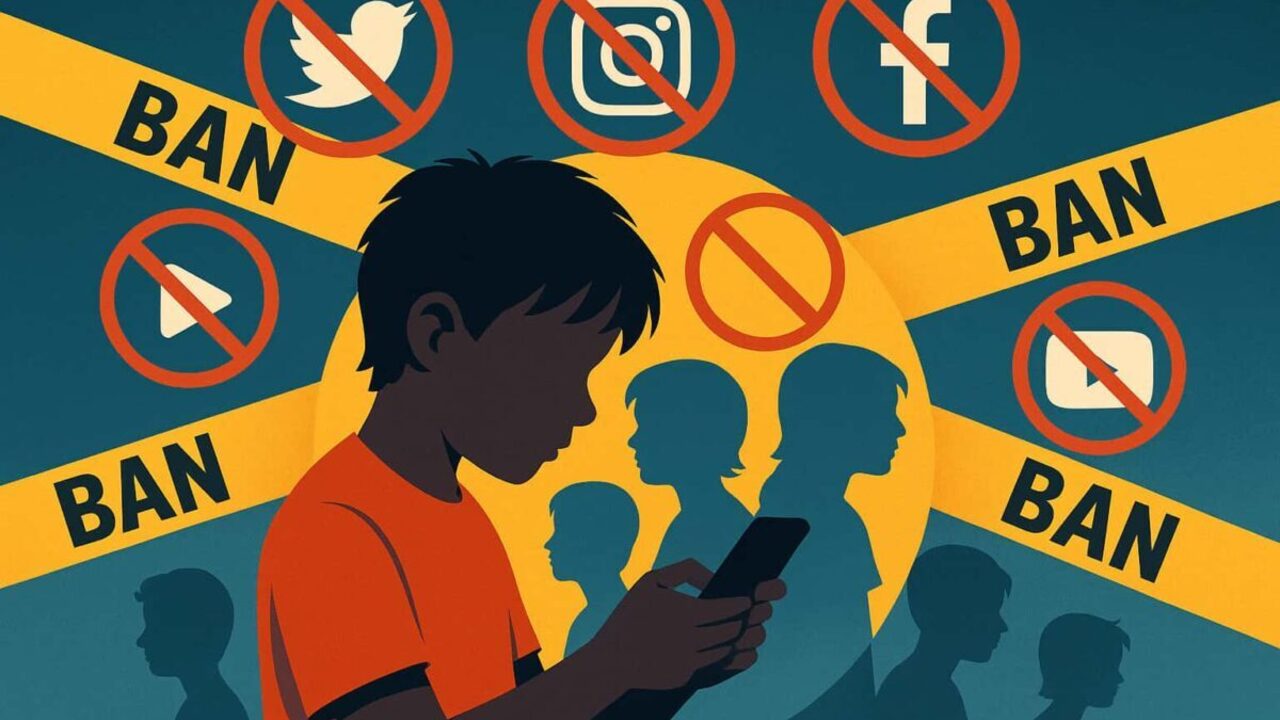
The Islamabad High Court (IHC) has issued notices to the National Database and Registration Authority (NADRA) and the Social Media Protection and Regulatory Authority in a case seeking stronger legal protections for children using social media in Pakistan.
The notices followed an application requesting that both institutions be included in ongoing court proceedings concerning children’s online safety. The petition calls for a comprehensive legal and regulatory framework to protect minors from online risks, including a proposed ban on social media accounts for children under the age of 16.
The development comes as Pakistan considers ways to strengthen online child protection, introduce reliable age-verification mechanisms, and establish clearer responsibilities for digital platforms.
However, the court’s latest action does not mean that a nationwide ban on social media for children under 16 has been implemented. The matter remains part of ongoing legal proceedings.
Islamabad High Court Issues Notices to NADRA and Regulatory Authority
The IHC chief justice issued notices to NADRA and the Social Media Protection and Regulatory Authority after the applicant requested their inclusion in the case.
NADRA has been identified as a potential participant because of its role in maintaining national identity records. The petition asks the court to examine whether the authority could help establish a secure and effective system for verifying the ages of social media users.
The proposed involvement of the Social Media Protection and Regulatory Authority is intended to address questions surrounding platform accountability, personal data protection, and mechanisms for handling complaints related to online harm.
The case raises broader questions about how Pakistan should regulate children’s access to social media and which institutions should be responsible for enforcing any future restrictions.
The court proceedings may help clarify the responsibilities of government bodies and the legal measures required to introduce an age-based social media policy.
READ MORE: NADRA Digitizes 99% of Payments as Pakistan Moves Towards a Cashless Economy
Petition Seeks Social Media Ban for Children Under 16
The petition calls for a comprehensive framework to protect children from harmful online experiences. One of its central proposals is to prohibit social media accounts for children below the age of 16.
The applicant has also requested effective age verification and measures to ensure appropriate parental supervision of children’s online activities.
Under the proposed framework, authorities would need to determine how users’ ages could be verified, how platforms would be expected to comply, and what safeguards would be necessary to protect children’s personal information.
The petition seeks a more coordinated approach to online safety rather than relying solely on individual complaints or voluntary measures adopted by social media companies.
Any restriction would require a clear legal basis, defined enforcement responsibilities, and practical arrangements for implementation.
Online Risks Facing Children Highlighted in the Case
The petition identifies several online risks that can affect children and teenagers. These include cyberbullying, harassment, sexual exploitation, exposure to inappropriate content, and concerns associated with excessive social media use.
Children may face difficulties identifying harmful interactions, protecting their personal information, or reporting abusive behaviour online. The petition argues that the state should establish stronger safeguards to protect minors’ best interests, privacy, dignity, and wellbeing.
Age restrictions are one possible policy response. Other approaches include stronger privacy settings, improved reporting systems, parental supervision tools, and faster action against harmful content.
The legal proceedings could contribute to the wider discussion about which combination of measures would provide effective protection while preserving children’s access to useful online resources.
Why NADRA’s Role in Age Verification Matters
Age verification is a major issue in proposals to restrict social media access for children under 16.
If a minimum age requirement is introduced, authorities and platforms would need a reliable way to determine whether an account holder meets the required age. The petition asks the court to consider whether NADRA could provide support for such a system.
However, an effective age-verification mechanism would need to address more than simply confirming a person’s age. It would also need to protect sensitive identity information and limit the collection or sharing of personal data.
A secure system would require clear rules about which organisations could access verification information, how that information would be processed, and how it would be protected against misuse.
The court proceedings may help establish whether NADRA should have a role in the proposed framework and what legal safeguards would be necessary.
No final age-verification arrangement has been confirmed through the court’s latest action.
Social Media Protection Authority Could Address Platform Accountability
The petition also seeks the inclusion of the Social Media Protection and Regulatory Authority in the proceedings.
The proposed role of the authority relates to accountability for digital platforms, protection of users’ personal information, and the handling of complaints concerning harmful online activity.
A formal regulatory framework could establish how complaints should be submitted, how quickly they should be reviewed, and which institutions would be responsible for investigating reported violations.
It could also clarify the obligations of social media platforms when dealing with child safety concerns.
The effectiveness of any such framework would depend on clearly defined legal powers, cooperation between government institutions, and workable procedures for addressing complaints.
The authority’s inclusion in the case is being sought by the applicant; the court’s issuance of notices should not be interpreted as a final ruling on the authority’s responsibilities.
Pakistan’s Wider Debate Over Children’s Social Media Use
The latest proceedings form part of a broader debate in Pakistan about whether children should face age-based restrictions on social media.
Earlier court proceedings have examined the legal authority required to regulate children’s access to online platforms. The Pakistan Telecommunication Authority has previously stated that existing legislation does not give it the power to impose a universal social media age limit or introduce mandatory age verification across platforms without an appropriate legal framework.
This distinction is important because restrictions on online access must be supported by the relevant laws and implemented by institutions with the necessary authority.
The discussion also involves the balance between protecting children from online harm and preserving their access to education, information, communication, and other beneficial digital services.
A durable policy would need to consider how age limits could be enforced, how privacy would be protected, and how children and parents could report harmful online experiences.
Child Protection Requires More Than Age Restrictions
A proposed ban on social media accounts for children under 16 is one option being discussed, but it is not the only approach to online safety.
Child protection advocates and institutions have also discussed measures such as stronger privacy settings, restrictions on potentially addictive platform features, better content moderation, improved complaint handling, and stronger safeguards against exploitation.
These approaches could be considered alongside age verification and parental supervision requirements.
Any future policy would also need to address practical questions, including how children could access educational resources, how platforms would handle age-related disputes, and how personal data collected for verification would be protected.
The court’s consideration of the petition may help bring these legal and regulatory questions into focus.
What Happens Next?
The Islamabad High Court’s issuance of notices marks a procedural development in the case. The latest action does not establish that the proposed ban has been approved, nor does it confirm when any restrictions might take effect.
Further proceedings will be needed to examine the requests made in the petition and the roles proposed for NADRA and the Social Media Protection and Regulatory Authority.
The legal and regulatory questions include whether a minimum age should be established, what form age verification should take, and which institutions should be responsible for implementation and oversight.
Until a relevant law or binding court order establishes otherwise, the proposed restriction should be treated as a request under consideration rather than an implemented nationwide policy.
For families, schools, technology companies, and policymakers, the case highlights the growing importance of developing clear and practical measures to protect children online while safeguarding their privacy and access to useful digital services.


