
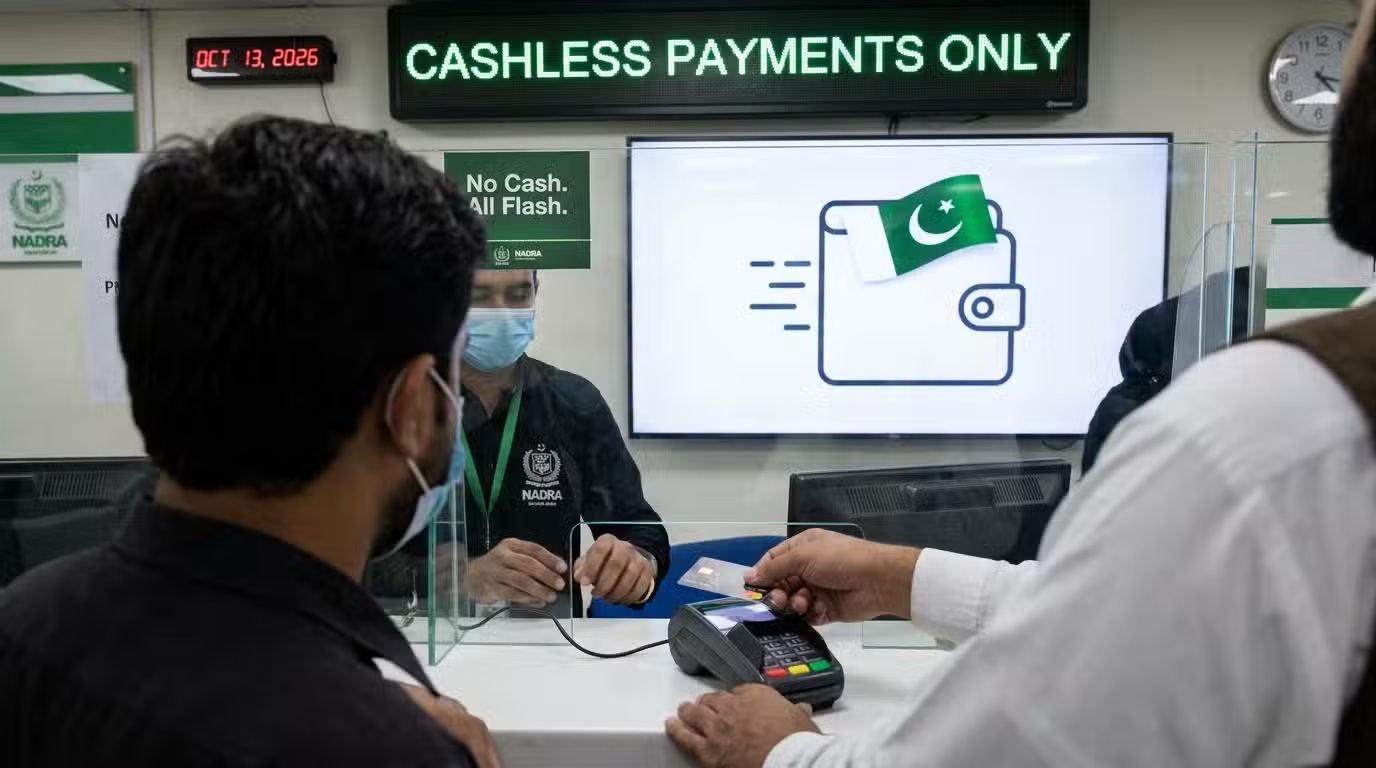
Pakistan’s National Database and Registration Authority (NADRA) has digitized 99% of payments at its service centres across the country as the government accelerates its efforts to establish a cashless economy. The development marks significant progress in making public services more convenient, improving financial transparency, and encouraging digital transactions.
The latest progress was reviewed during a meeting held at the Finance Division on October 13, 2026. The meeting was chaired by Minister of State for Railways and Finance Bilal Azhar Kayani, with officials examining the achievements of the government’s Cashless Pakistan initiative and discussing priorities for the next phase.
NADRA Moves Closer to Fully Digital Payments
According to the briefing presented at the meeting, 99% of payments at NADRA service centres have now been digitized. The achievement reflects the growing adoption of electronic payment methods for government-related services.
Digital payments can reduce dependence on physical cash, simplify transactions, and improve the tracking of payments. For citizens, wider access to digital payment options can also make it easier to pay service fees without relying exclusively on cash.
However, the reported figure does not mean that every transaction across NADRA’s entire service network is necessarily cashless. The remaining share of payments still needs to be addressed as the government works towards broader digital adoption.
Passport Centres Also Accept Digital Payments
The government has also expanded digital payment facilities to passport centres, allowing applicants to use electronic payment methods for relevant services.
This move is part of the broader effort to digitize public-sector transactions and make government services more accessible. Digital payment options can help reduce the inconvenience associated with handling cash and may improve the overall payment experience for citizens.
The expansion of cashless payments across public institutions is also intended to strengthen accountability by creating more transparent transaction records.
Digital Payments Across Government Entities Reach 75%
The meeting also reviewed progress across federal government entities that operate under centralized and self-accounting payment systems.
According to the briefing, around 75% of payments across these entities are now accepted digitally. This indicates that the shift towards electronic transactions is extending beyond NADRA and passport services to other parts of the public sector.
The government aims to expand digital payment acceptance further, making electronic transactions a more common option for citizens dealing with public institutions.
Achieving this target will require continued coordination among government departments, financial institutions, payment service providers, and technology companies.
Digital Payment Merchants Increase Fourfold
Another major development highlighted during the meeting was the fourfold increase in merchants accepting digital payments during the previous fiscal year.
A wider network of merchants is essential for building a cashless economy because consumers need convenient places to use digital payment services. Greater acceptance can encourage people to make electronic payments for everyday purchases rather than relying on cash.
The expansion also creates opportunities for banks, fintech companies, and digital wallet providers to reach more customers and develop services suited to different segments of the population.
However, increasing the number of registered merchants is only one part of the process. The government also needs reliable data showing how frequently these merchants receive digital payments and how many customers actively use the services.
Government to Review Digital Payment Performance Indicators
During the meeting, participants reviewed three important indicators for measuring the progress of Pakistan’s cashless economy.
These indicators include:
- Active and unique digital payment users: Measuring how many individuals actually use digital payment services.
- Annual digital transactions: Tracking the volume of electronic payments completed over a specific period.
- Merchants accepting digital payments: Monitoring the expansion of businesses and service providers that can receive electronic payments.
The committee also decided to review the definitions of active app users, active merchants, and unique digital payment users.
This review is intended to improve the accuracy of official statistics and prevent double counting. For example, a single person may use multiple payment applications, while a merchant may be registered with more than one service provider.
Without consistent definitions, reported figures may not accurately reflect the number of people and businesses actively participating in the digital economy.
Reliable data will therefore be important for assessing whether the government’s digital payment initiatives are producing meaningful changes in everyday financial activity.
Private Sector Asked to Recommend Tax Policy Changes
The government has also sought input from private-sector representatives on possible tax policy changes that could encourage wider adoption of digital payments.
Minister of State Bilal Azhar Kayani asked participants from the private sector to prepare recommendations that could support the expansion of electronic transactions.
Tax policy can influence how businesses receive payments, maintain records, and choose between cash and digital channels. Any proposed changes will need to consider their impact on merchants, consumers, financial institutions, and the wider economy.
Consultation with the private sector could help the government identify practical barriers to digital payment adoption and develop measures that encourage businesses to participate.
No specific tax changes were announced as part of the meeting. The focus remained on gathering recommendations and improving the conditions needed to expand digital transactions.
How a Cashless Economy Could Benefit Pakistan
Pakistan’s push towards digital payments is intended to improve convenience, strengthen transparency, and encourage greater documentation of economic activity.
Electronic transactions can create digital records that make payments easier to track and reconcile. For businesses, these records may simplify bookkeeping and help improve financial management. For consumers, digital payment options can reduce the need to carry cash and provide alternative ways to pay for goods and services.
A broader digital payment network may also support financial inclusion by giving more people access to formal financial services.
Nevertheless, the transition will depend on several factors, including the availability of reliable internet connectivity, affordable payment services, digital literacy, consumer confidence, and the ability of smaller businesses to adopt suitable payment solutions.
Security and privacy will also remain important. People need confidence that their financial information is protected and that they can resolve payment disputes when transactions fail.
Government Continues to Expand Cashless Pakistan Initiative
The October 13 meeting brought together representatives from the Finance Division, State Bank of Pakistan, Ministry of Information Technology and Telecommunication, NADRA, and Pakistan Digital Authority.
Private-sector participants included representatives from the Pakistan Banking Association, Easypaisa, JazzCash, Bank Alfalah, JS Bank, and Karandaaz Pakistan.
Their participation reflects the need for cooperation between government institutions and the financial technology sector to expand digital payments across the country.
The Cashless Pakistan initiative aims to make electronic transactions more convenient, strengthen transparency, and bring more economic activity into the documented economy. The latest review focused on tracking progress, improving the quality of digital payment data, and identifying measures to support further growth.
What Happens Next?
With 99% of payments at NADRA service centres digitized and digital payment acceptance expanding across other public institutions, the government is now focused on improving adoption and measuring results more accurately.
The next phase will depend on how effectively authorities address remaining gaps, encourage more merchants to accept digital payments, and improve coordination between banks, fintech companies, regulators, and government departments.
For citizens, the wider availability of digital payment options could make government transactions easier and more convenient. For Pakistan’s economy, the longer-term objective is to build a payment system that supports transparency, financial inclusion, and more reliable economic documentation.
While the latest figures show considerable progress, the success of Cashless Pakistan will ultimately depend on whether digital payments become accessible, reliable, and practical for people and businesses across the country.


