
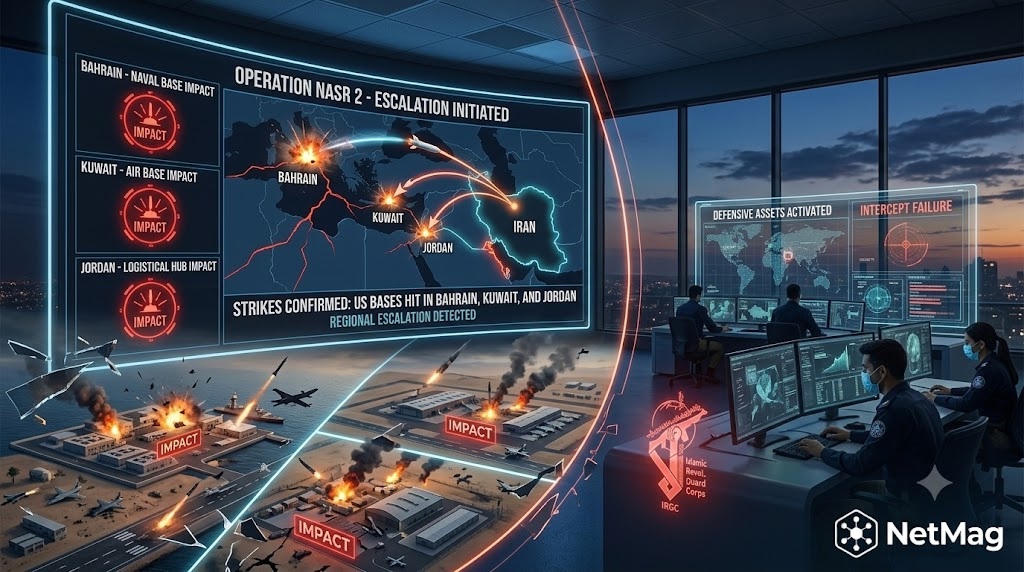
The confrontation between the United States and Iran took a sharp turn this week, with both sides trading direct hits across the Gulf region. American forces struck targets in southern and western Iran, and in response, Iranian forces went after U.S.-linked sites in Bahrain, Kuwait, and Jordan on Tuesday. A tanker was also struck while transiting the Strait of Hormuz, one of the world’s most critical oil shipping routes.
This is a fast-moving story, and details are still being confirmed as of Tuesday, July 21, 2026. (Reporting drawn from Reuters wire coverage; verify latest developments before publishing.)
Why the US Struck Iran Again
The latest round of American strikes followed a warning from President Donald Trump that Tehran would pay a steep price for the deaths of U.S. troops. According to U.S. Central Command, the strikes hit Iranian military command centers, maritime capabilities, missile and drone launch sites, and air defense systems.
American troop losses have been mounting, with U.S. deaths climbing to 17 over the weekend — making this stretch of fighting one of the deadliest for U.S. forces since the conflict began. Trump has also been facing domestic pressure over rising gasoline prices tied to the war, and framed the latest strikes as retaliation for American service members killed in the fighting.
Iran’s Response: Bahrain, Kuwait, and Jordan Targeted
Iran hit back by targeting U.S. sites in Bahrain, Kuwait, and Jordan. Iranian state media said Iranian forces struck accommodation facilities used by U.S. military personnel at Bahrain’s Sheikh Isa Air Base, though there’s been no confirmation yet from the U.S. military or Bahrain, and Reuters said it could not independently verify the reports.
Iran’s Revolutionary Guards also said they went after infrastructure in Bahrain tied to the U.S. tech company Amazon, describing it as retaliation for a U.S. strike on the construction site of Iran’s planned Darkhovin nuclear power plant.
In Kuwait, the Iranian army said it carried out drone attacks against three U.S. military bases on Tuesday. Jordan was hit too — the Revolutionary Guards claimed responsibility for an attack on a U.S. military site there, while Jordanian forces said they intercepted and destroyed five Iranian drones.
Tanker Struck in the Strait of Hormuz
The fighting has now spilled into one of the world’s busiest oil chokepoints. The United Kingdom Maritime Trade Operations agency reported that a tanker in the Strait of Hormuz was struck by an unknown projectile, forcing the crew to abandon ship and take to a lifeboat. Iran’s Revolutionary Guards separately said two oil tankers caught fire after explosions while attempting to transit the strait’s southern route.
Given that a huge share of the world’s seaborne oil passes through the Strait of Hormuz, any disruption there tends to ripple quickly through global energy markets.
A Possible New Front: The Houthi Blockade Threat
The exchanges come a day after Yemen’s Iran-aligned Houthi movement said it would impose a naval blockade on Saudi Arabia, raising the possibility of the conflict widening well beyond the Gulf states directly involved so far. Shipping companies loading or unloading cargo at Saudi ports were warned in a message sent Monday that vessels could be targeted “in any location.”
That threat, layered on top of the direct U.S.-Iran exchanges, adds another layer of risk to global trade and energy supply routes that were already under strain.
Where Things Stand Diplomatically
Despite the intensity of this week’s strikes, there are still signs that both Washington and Tehran want a way back to the negotiating table. That’s part of why oil prices have stayed relatively contained even as the exchanges have escalated and largely unraveled an interim peace agreement reached last month.
A senior Iranian official reportedly told Reuters that Tehran had received a proposal from mediators for a temporary truce, and Iran’s Interior Minister, Eskandar Momeni, has asked Pakistan to resume its mediation role in the conflict, traveling to Islamabad for follow-up talks.
Israel, notably, has not joined this latest round of strikes on Iran. Israeli Finance Minister Bezalel Smotrich said the country has no desire to insert itself into the fighting but is prepared for any scenario.
READ MORE: China Local Chip Shipments US Sanctions Breakthrough: Annual Deliveries to Hit 5 Million
What This Means Going Forward
With U.S. and Iranian forces now trading direct hits across multiple countries, a tanker attacked in the Strait of Hormuz, and the Houthis threatening a separate blockade on Saudi Arabia, the risk of a wider regional conflict is real and rising. At the same time, the reported outreach around mediation — through Pakistan and other channels — suggests neither side has fully closed the door on de-escalation.
This is a developing situation, and figures on casualties, damage, and diplomatic movement are likely to change quickly. Readers should treat details here as accurate as of Tuesday, July 21, 2026, and check wire services directly for the latest updates.


