
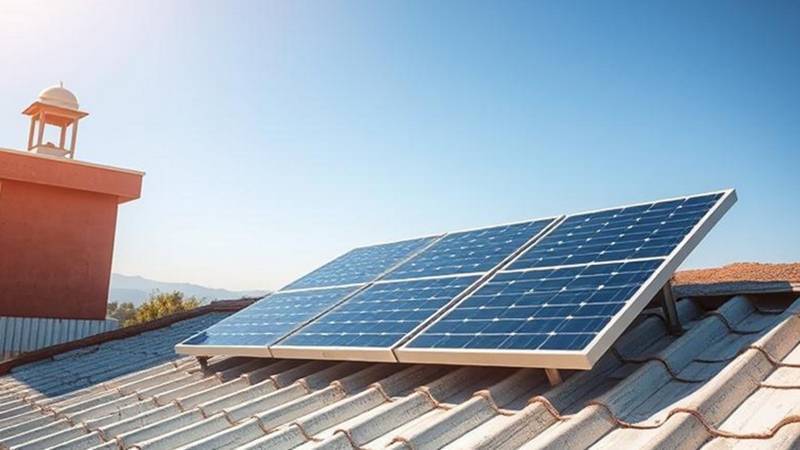
Pakistan’s rapid shift toward rooftop solar is putting increasing pressure on the country’s traditional electricity system as households and businesses generate more of their own power and reduce dependence on the national grid.
The growing adoption of solar has changed electricity consumption patterns across the country. While consumers are benefiting from lower energy costs and greater independence, power-sector authorities are now facing the challenge of managing declining grid demand while continuing to finance the infrastructure and fixed costs of the conventional electricity system.
Solar Adoption Continues to Grow
High electricity tariffs, falling solar equipment prices and concerns over the reliability of grid electricity have encouraged more Pakistanis to install rooftop solar systems.
The trend has been particularly visible among households, businesses and industries looking to reduce their monthly electricity bills. Net-metered electricity generation has also recorded significant growth, while overall power generation has faced pressure as consumers increasingly rely on self-generated electricity.
Pakistan’s solar expansion has also gone well beyond officially recorded net-metered systems, with a substantial amount of privately installed capacity operating outside the formal grid structure.
Falling Grid Demand Creates a New Challenge
The growing number of solar-powered consumers is creating a difficult situation for electricity distribution companies.
As households and businesses generate more electricity themselves, they purchase fewer units from the grid. However, many of the costs associated with maintaining the electricity system do not disappear when grid consumption falls.
Generation capacity payments, transmission infrastructure, distribution networks and other fixed expenses still need to be financed.
This means that a smaller number of grid-dependent consumers may increasingly have to carry a larger share of the system’s fixed costs. Regulators have warned that unchecked changes in electricity demand could create further financial pressure on the power sector.
READ MORE: TECNO POVA Curve 2 5G Is Coming Back to Pakistan After Two Years
Government Reviews Power Sector Regulations
The government is now reviewing the regulatory framework to better reflect the changing electricity market.
Finance Minister Muhammad Aurangzeb recently chaired a meeting of the Steering Committee on Power Sector Regulatory Regime, where officials discussed the impact of growing solar adoption and changing demand patterns.
The committee examined ways to improve efficiency, attract investment, strengthen competition and protect consumers while making the power sector more financially sustainable.
Officials also discussed giving the National Electric Power Regulatory Authority (NEPRA) a stronger role in adapting the regulatory system to technological changes and the evolving energy market.
Net Billing Changes Solar Economics
The economics of rooftop solar have also changed following Pakistan’s move away from the previous net-metering arrangement.
Under the new framework, consumers receive a lower rate for surplus electricity supplied to the grid while purchasing electricity from the grid at applicable consumer tariffs. The government has argued that the reform is necessary to address financial distortions and protect consumers who remain dependent on the national electricity system.
The policy shift has created uncertainty for prospective solar buyers, although the underlying financial incentive for self-generation remains strong because grid electricity remains expensive.
Batteries Could Become the Next Major Trend
Pakistan’s solar market is increasingly moving toward energy storage.
As solar panels generate electricity primarily during daylight hours, batteries can allow consumers to store excess energy and use it later when solar generation falls.
Recent import figures indicate that battery demand is rising rapidly alongside solar equipment. This could further reduce households’ dependence on grid electricity, particularly during evening peak hours.
The growing use of batteries could therefore represent the next stage of Pakistan’s energy transition, allowing consumers to rely more heavily on their own electricity generation throughout the day.
Power Sector Faces a Structural Shift
Pakistan’s solar boom is no longer simply an environmental or consumer trend. It is becoming a major structural change for the country’s electricity market.
Consumers are increasingly making energy decisions based on cost, reliability and independence rather than relying entirely on the traditional grid.
The government now faces the challenge of redesigning the electricity system around this changing reality. Instead of treating rooftop solar solely as a threat to grid revenues, policymakers will need to find ways to integrate distributed generation, battery storage and conventional power infrastructure into a sustainable long-term model.
The success of Pakistan’s energy transition will ultimately depend on whether the country can modernize its power sector while ensuring that both solar users and consumers who remain dependent on the grid are treated fairly.


