Pakistan has continued its diplomatic engagement with Iran as regional tensions and uncertainty over negotiations with the United States threaten stability across the Middle East.
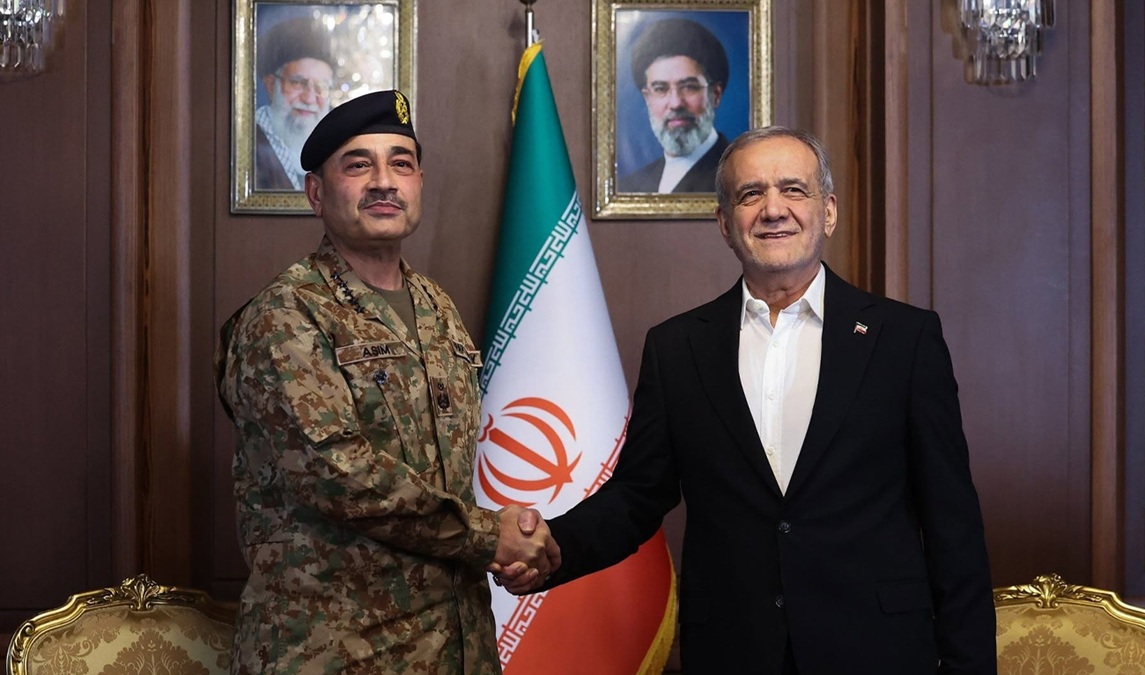
In this context Pakistan’s Chief of Defence Forces and Chief of Army Staff, Field Marshal Syed Asim Munir, visited Tehran on Tuesday and held meetings with Iranian President Masoud Pezeshkian and other senior officials.
According to a reports, Iranian leaders conveyed that Washington would need to take initial steps to rebuild trust and that Tehran’s seven-point proposal could provide a starting point for renewed negotiations.
Pakistan’s Interior Minister Mohsin Naqvi accompanied the army chief during the visit.
Iran Sets Conditions for Renewed Negotiations
The meetings took place against the backdrop of a prolonged confrontation between Iran and the United States.
Iranian officials reportedly told the Pakistani delegation that they were not prepared to resume negotiations without action by Washington to address Tehran’s demands.
These demands include ending the US blockade on Iranian ports, lifting restrictions affecting Iranian oil exports and stopping regional hostilities, according to Reuters’ reporting on the discussions.
Iran has maintained that its negotiating position is linked to national sovereignty and security. The United States has its own demands concerning Iran’s nuclear programme and regional activities.
The positions of the two sides remain far apart, and the reported meetings have not established that an agreement has been reached.
Pakistan’s Role in Regional Diplomacy
Pakistan has sought to maintain communication between Washington and Tehran and encourage a diplomatic solution to the conflict.
The latest visit reflects Islamabad’s continued engagement at a time when regional tensions could affect energy supplies, maritime trade and economic stability.
Also Read:
Iranian Professor Warns Saudi Arabia, UAE and Kuwait Over Next Phase of US-Iran War
The Strait of Hormuz is particularly important because of its role in international oil shipments. Prolonged disruption could increase energy costs for countries that depend on imported fuel, including Pakistan.
No Confirmed Breakthrough Yet
Although the meetings have renewed attention on Pakistan’s diplomatic role, no final agreement or confirmed breakthrough was established in the reports reviewed for this article.
Dawn reported that Pakistan’s Foreign Office and Inter-Services Public Relations had not issued an official statement detailing the outcome at the time of publication.
The next steps will depend on whether Washington and Tehran respond to each other’s conditions and whether further negotiations can be arranged.
For Pakistan, a reduction in regional tensions could help ease pressure on energy imports, protect trade routes and reduce the risk of a wider conflict.