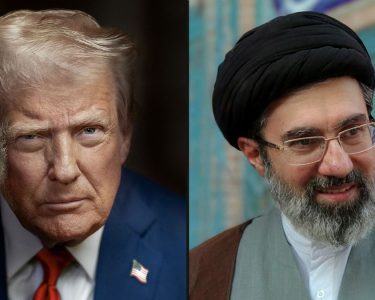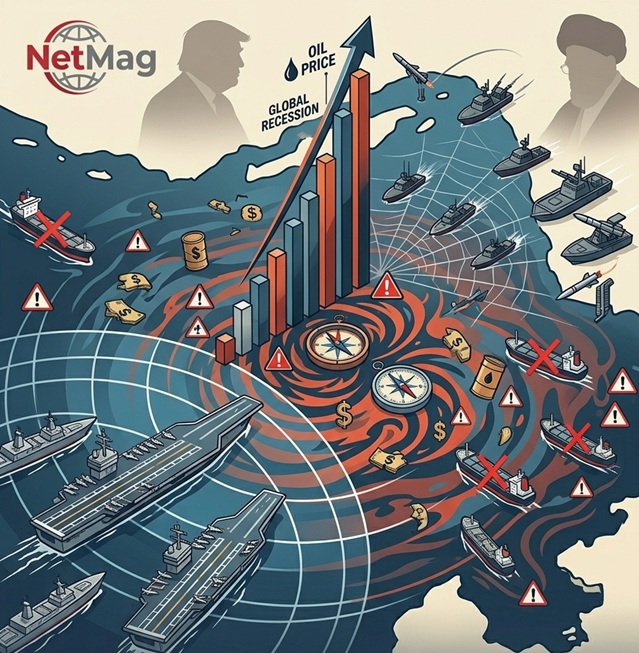
The global energy market has entered a state of “double-jeopardy” as President Donald Trump issues a direct threat to blockade the Strait of Hormuz, a move that paradoxically targets a chokepoint that Iran has already effectively brought to a standstill. This unprecedented “blockade vs. blockade” scenario has left international diplomats at the Islamabad Peace Talks scrambling to prevent a total maritime shutdown that could decouple the global economy from Middle Eastern oil.
The Paradox of the Double Blockade
To understand why Trump is threatening to blockade the Strait of Hormuz when Iran is already restricting traffic, one must look at the “Strategy of Denial.” While Iran’s current management of the waterway involves selective transit and the harassment of Western-linked tankers to pressure the U.S. during negotiations, a formal U.S. naval blockade represents a shift from defensive reaction to offensive economic strangulation.
President Trump’s logic is simple: if the Strait of Hormuz cannot be open on American terms, it will be closed on American terms. By threatening a blockade, Trump aims to:
-
Seize the Initiative: Move the narrative from “Iran is closing the Strait” to “The U.S. is controlling the world’s energy tap.”
-
Cut Off Tehran’s Revenue: While Iran blocks others, it still attempts to sneak its own “dark fleet” tankers out. A U.S. blockade would target these specific vessels.
-
Force a Deal: Use the threat of a global price spike to force China and other major importers to pressure Tehran into accepting the sixth clause of the 10-point plan.
Strategic Differences in Tactics
| Feature | Iran’s Current “Management” | Trump’s Proposed Blockade |
| Primary Goal | Negotiating Leverage | Economic Decapitation |
| Mechanism | Mines, Swarm Boats, Harassment | Fifth Fleet Carrier Strike Groups |
| Traffic | Selective (Allies allowed) | Absolute (Total Maritime Shutdown) |
| Legal Status | Sovereign Territorial Claim | Act of War / Maximum Pressure |
The Risks of “Mutually Assured Disruption”
Military analysts warn that Trump’s threat to blockade the Strait of Hormuz could lead to a catastrophic military miscalculation. If the U.S. Navy begins intercepting all vessels, Iran’s Revolutionary Guard (IRGC) is likely to respond with kinetic strikes, moving the conflict from an economic standoff to a hot war.
Also Read:
Trump Threatens 50% Tariff on China Over Iran Arms support
In Islamabad, Pakistani mediators have pointed out that a U.S. blockade would technically violate the spirit of the ongoing ceasefire. However, the White House maintains that as long as the 10-point plan remains stalled at the Serena Hotel, “strategic patience” has reached its limit.
Global Economic Impact
The mere mention of a U.S.-led blockade has already caused Brent Crude to surge past $140 per barrel. If the blockade is enacted, experts predict prices could hit $250, causing an immediate global recession. For Trump, the risk is a calculated gamble—betting that the threat of a total shutdown will break Iran’s resolve before it breaks the global economy.