
Claude AI text watermark technology is now being used by Anthropic to add invisible, machine-readable markers to content generated by Claude. The new system is designed to help identify AI-generated text while supporting greater transparency around artificial intelligence-generated content. The move also comes as new AI transparency requirements take effect in the European Union.
How Claude’s Invisible Watermark Works
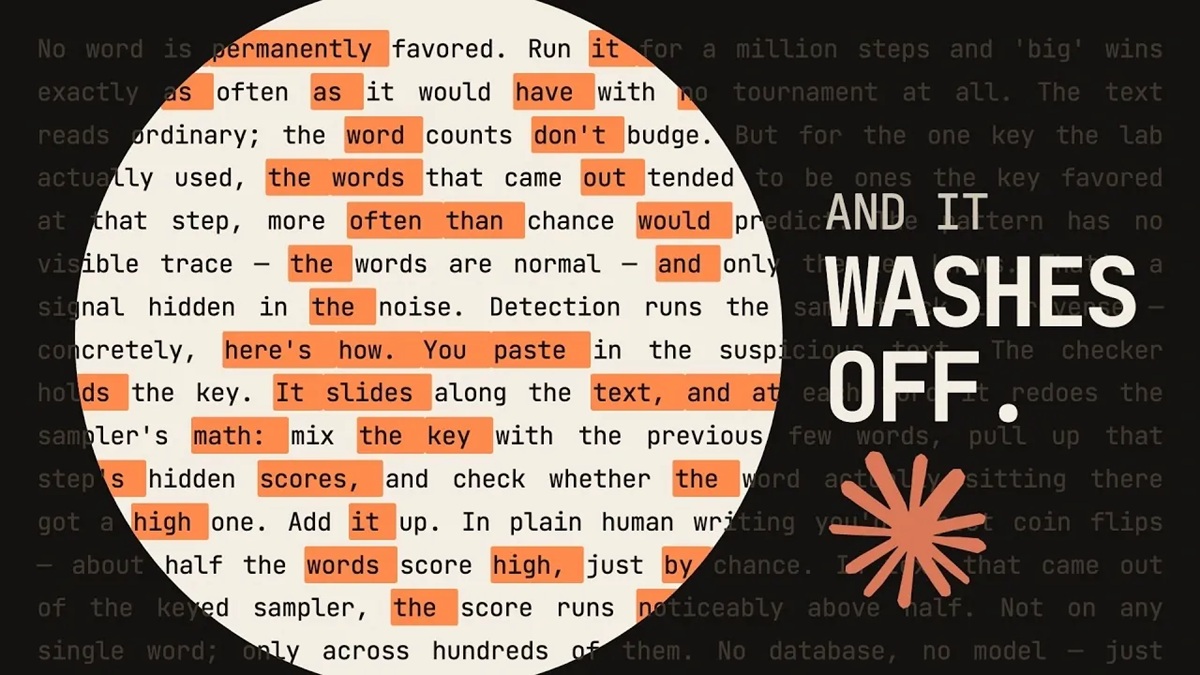
Unlike traditional watermarks that are visible to readers, Claude’s watermark is embedded directly into the text during generation. The system subtly influences the model’s selection of words and phrasing, creating a hidden statistical pattern that can later be identified by a compatible detection system.
The process does not add unusual characters, symbols or visible labels to the final text. As a result, users can read the content normally without knowing that a watermark is present.
Anthropic says its newer Claude models launched in the European Union from August 2, 2026, support machine-readable marking from launch. The company also plans to extend marking capabilities to older models.
Why Anthropic Is Adding Watermarks
The change comes as the EU AI Act’s transparency requirements become applicable. The rules are designed to make AI-generated and manipulated content easier for machines to identify and distinguish from human-created material.
Anthropic’s approach is intended to improve transparency while maintaining the quality and readability of Claude’s responses.
The company is also using digitally signed provenance information for supported generated files, adding another layer of information about how AI-generated content was produced.
Watermarking Does Not Mean AI Detection Is Perfect
Although the technology is designed to make Claude-generated content identifiable, it should not be interpreted as a universal AI detector.
Text watermarking can face challenges when content is heavily rewritten, translated or transformed. There are also concerns about false positives and how AI-marked content could be interpreted in education, publishing and professional environments.
Also Read:
How to Build an AI Second Brain for ChatGPT, Claude, and Gemini
Anthropic has indicated that it plans to provide tools for detecting its watermarks, although the company has not disclosed all technical details of the system.
Could Other AI Companies Follow?
Claude’s move could increase pressure on other major AI providers to adopt similar technologies.
As governments increasingly demand transparency around synthetic content, invisible watermarks and provenance technologies could become more common across AI platforms.
For users, the development means that AI-generated text may become increasingly traceable without requiring visible labels or changes to the way the content appears.
What This Means for Claude Users
For most users, the immediate experience of generating text with Claude is expected to remain unchanged. The watermark is designed to operate behind the scenes rather than appearing visibly in the generated response.
However, the change could have broader implications for students, writers, publishers, businesses and content creators who use AI-generated material. The ability to identify content as having been generated or processed by an AI system could influence how organizations handle AI-assisted work.
Anthropic’s move represents another step toward a future where AI-generated content carries a hidden digital identity, potentially making the origin of online material easier to verify.


