
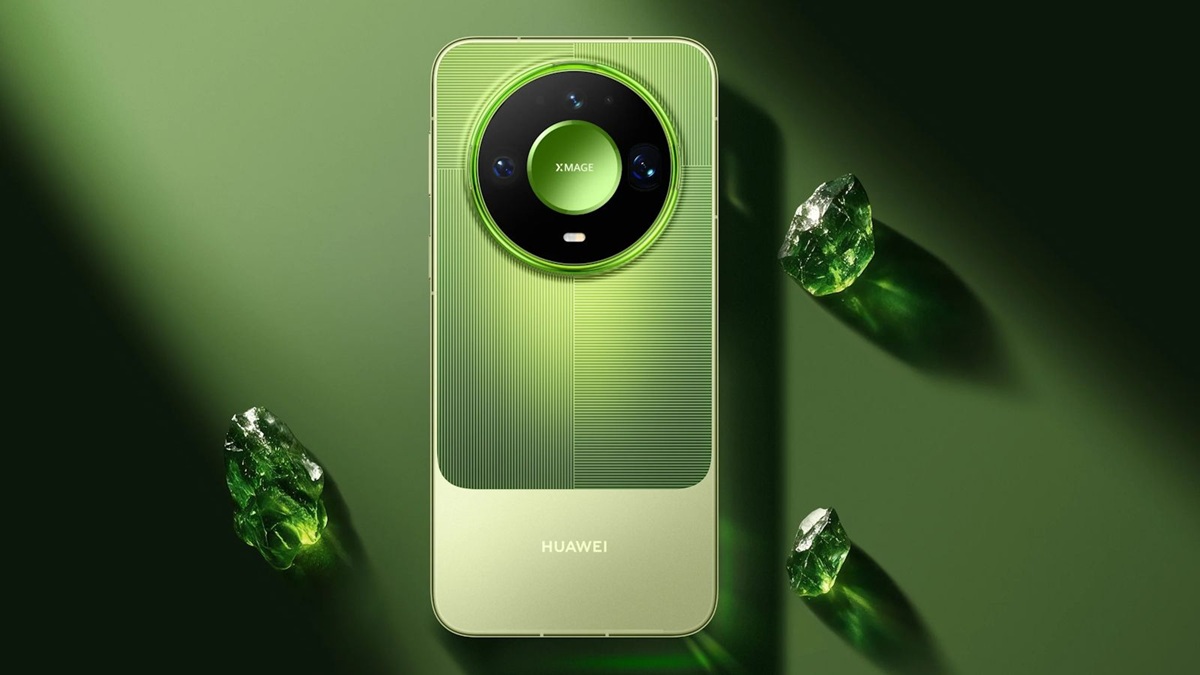
Huawei isn’t easing into the flagship conversation this year it’s shouldering its way in. The Mate 90 Pro Max just launched in China, and on paper it reads less like a phone spec sheet and more like a list of things engineers weren’t supposed to be able to fit into one device yet: a 200-megapixel periscope camera, a screen that can hit 12,000 nits, and a battery large enough to make range anxiety feel like an iPhone problem.
Let’s start with the part Huawei clearly wants people talking about.
A Camera System Built for People Who Actually Care About Photos
The main shooter is a 50MP sensor with RYYB color filtering, optical stabilization, and a variable aperture that swings all the way from f/1.4 to f/4.0 meaning it can adapt to a dim restaurant table and a sun-drenched afternoon without you touching a setting. Alongside it sits a 40MP ultrawide, and then the headline act: a 200MP periscope telephoto, also RYYB, also stabilized, pushing optical-quality zoom out to 8x and digital zoom all the way to 100x.
Huawei didn’t stop there. The company’s third-generation “Red Maple” color engine is tuned specifically to make skin tones and natural colors look less like a camera’s best guess and more like what your eyes actually saw.
And then there’s the Collector’s Edition the version for people who treat their phone like a camera that happens to make calls. It adds an optional module called the Ruiying Z10: a full 1-inch RYYB sensor with genuine 10x continuous optical zoom and a 24-240mm focal range, the kind of range that used to require a separate bag. Front-facing, you’re getting a 13MP autofocus ultrawide plus a 3D depth sensor, and the whole system shoots 4K video.
A Display Bright Enough to Fight Direct Sunlight and Win
The 6.9-inch dual-layer OLED panel runs a 2848×1320 resolution with a refresh rate that scales fluidly from 1Hz up to 120Hz — smooth when you need it, battery-friendly when you don’t. The number that’ll actually stop people mid-scroll, though, is peak brightness: 12,000 nits locally. That’s not a typo, and it’s not a number most displays even approach. Add BT.2020 color coverage and 1440Hz PWM dimming for eye comfort, and this is a screen built as much for outdoor visibility as for color accuracy.
Must Read:
Huawei Unveils World’s First NPO-Based AI SuperPoD With 4,096 Processors
Protection-wise, the standard model ships with Kunlun Glass, while the Collector’s Edition steps up to Basalt Kunlun Glass — Huawei’s toughened variant for the people paying extra for the full camera kit.
Power That Should Last You Through an Actual Day
A 6,800mAh battery is a big number on its own, but Huawei backs it with 100W wired charging and 50W wireless fast enough that a short charge before heading out the door should carry real weight. Under the hood, the 16GB variants run Huawei’s own Kirin 9050 Pro chipset, paired with HarmonyOS 7. You’re also getting Wi-Fi 7, Bluetooth 6.0, NFC, eSIM support, and Huawei’s StarLight E2.0 connectivity tech plus IP68 and IP69 ratings, so dust and water exposure shouldn’t be a dealbreaker.
What It’ll Cost You (in China, For Now)
Pricing starts at CNY 9,499 (roughly $1,417) for the 12GB+512GB base model. Step up to 16GB+512GB and you’re at CNY 9,999, while the 16GB+512GB Collector’s Edition runs CNY 10,999. The top-tier 16GB+1TB Collector’s Edition tops out at CNY 12,999. Colors on offer: Rose Gold, Jade Green, Crystal White, and Obsidian Black.
Want the full modular camera experience? The Ruiying Z10 module alone costs CNY 5,999, the complete Pro Max camera kit runs CNY 19,499, and there’s even a small rig teleconverter kit for CNY 1,799 if you’re building out a proper mobile photography setup.
Should You Wait for It in Pakistan?
Right now, the Mate 90 Pro Max is a China-only launch, and Huawei hasn’t said a word about pricing or availability anywhere else Pakistan included. Given how Huawei’s recent flagships have typically made their way into the local market through grey-channel imports before any official rollout, expect a similar pattern here: patience, or a willingness to pay import premiums, will likely be required for anyone outside China who wants one early.


